
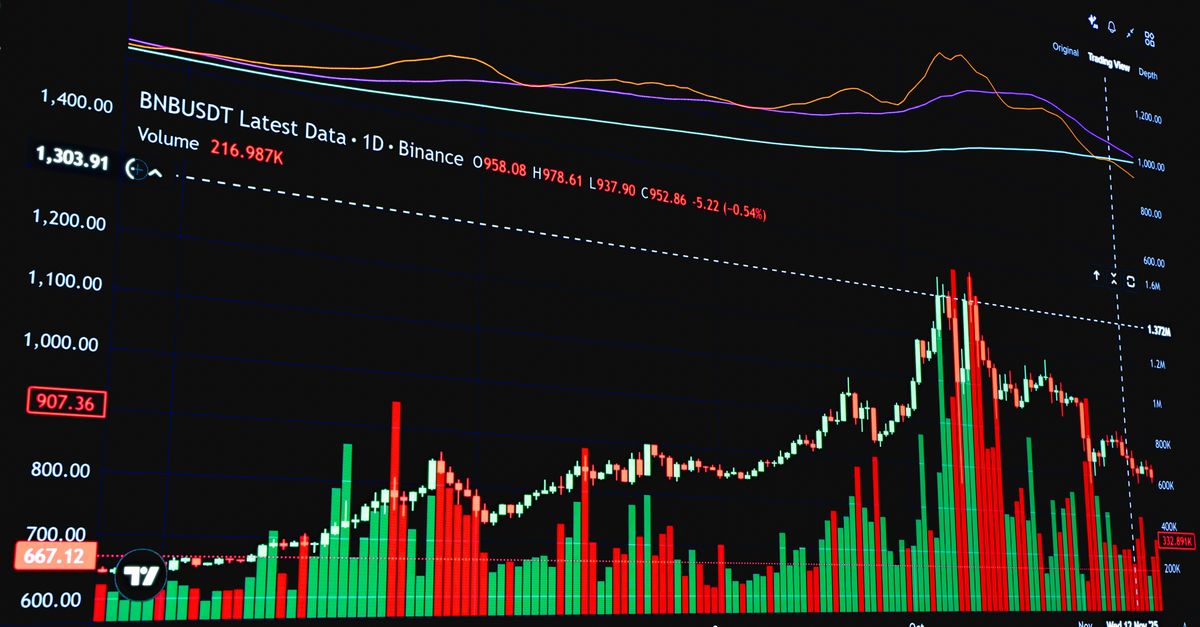
Binance lost roughly $6.4 billion to hackers on October 29, 2026, in what Chainalysis and TRM Labs confirm is the largest theft in crypto history. Yet Bitcoin fell only 3-4% in the hours that followed — a fraction of the 11% plunge the same exchange suffered after a much smaller breach in 2018. That gap tells a story not about the hack itself, but about how fundamentally different today’s crypto market is from the one that existed eight years ago.
The 2026 theft dwarfs every prior incident, including the $1.5 billion Bybit hack of February 2025, which until now held the record. Blockchain analytics firms have linked the new attack to the same North Korean hacking group behind that earlier heist, a connection detailed in reporting on the TraderTraitor group’s role. The attacker still controls more than 420,000 ETH and 18,270 BTC, together worth about $2.4 billion, with total unrecovered holdings across tokens exceeding $3 billion. Binance says it has set aside more than $6.34 billion in company funds to make affected users whole, and roughly $3 billion of the stolen assets has already been frozen, with withdrawals expected to resume within 45 hours of the breach.
A market built on a different foundation
To understand why the price reaction was so muted, it helps to look back at March 2018. A phishing and API-key exploit on Binance back then triggered a Viacoin pump-and-dump scheme involving 31 accounts, sending Bitcoin down 11% within minutes — from $10,740 to $9,690, and eventually toward $6,600 by early April. That crash landed on a market already reeling from the collapse of the December 2017 bubble, when Bitcoin had peaked near $20,000. The entire crypto market was worth just over $400 billion at the time.
Today’s market looks nothing like that. Total crypto market capitalization now sits near $2.6 trillion, more than six times larger, giving the system far more capacity to absorb shocks. More importantly, ownership structure has changed. US spot Bitcoin ETFs now hold approximately 1.3 million BTC, about 6% of total supply, locking a meaningful share of coins into institutional, long-horizon vehicles rather than exchange-based trading balances vulnerable to panic selling. BlackRock’s iShares Bitcoin Trust alone pulled in $136 million in inflows the day before the hack, according to Farside Investors data, and preliminary figures showed $17 million more flowing in on Thursday, recorded just before the breach began. That steady institutional demand didn’t vanish the moment the hack was disclosed — it simply kept functioning in the background, cushioning the blow.
Still, the hack was not without consequences. Bitcoin dipped to about $76,400 the Friday after the breach, roughly 6% below its level following the prior Federal Reserve decision, and more than $1.3 billion in leveraged positions were liquidated as the news spread. The CoinMarketCap Fear and Greed Index slipped from 43 to 36 — a notable move, but nowhere near the depth of fear seen in 2018, when the index fell to 12. Glassnode data also show that long-term holders are currently sitting on unrealized losses across roughly 4 million BTC bought between $85,000 and $118,000, a reminder that even a resilient market carries pockets of real financial stress, and that Bitcoin remains about 38% below its record high of $126,080.
What the hack exposes, and what to watch
The muted price reaction should not be read as evidence that exchange security no longer matters. If anything, the scale of the theft — detailed in coverage of the $6.4 billion loss — has reignited scrutiny of how centralized exchanges safeguard customer assets, and regulators have moved quickly. The CFTC has cited the Binance breach while pushing for tighter rules on offshore exchanges, and federal investigators are now involved directly, as outlined in reporting on the FBI and Secret Service joining the probe. Stablecoin issuers have also acted, freezing billions in suspect funds tied to the breach.
- Whether the roughly $3 billion in frozen assets can be fully recovered or returned to affected users
- How regulators respond with new exchange oversight requirements in the US and elsewhere
- Whether North Korean-linked actors attempt to launder the remaining $2.4 billion-plus through cross-chain swap networks, as seen after the Bybit hack
- Whether institutional ETF demand continues to offset exchange-related shocks in future incidents
The real takeaway from this episode may be less about Bitcoin’s resilience and more about where risk has migrated. Exchange hacks remain a persistent threat, but the growth of regulated investment vehicles and deeper institutional participation appears to have changed how shocks propagate through the broader market — even when the theft itself sets a grim new record.
Source: Decrypt
This content is for informational purposes only and does not constitute financial or investment advice.



Create a free account to comment and earn rewards.
Create account Log in