
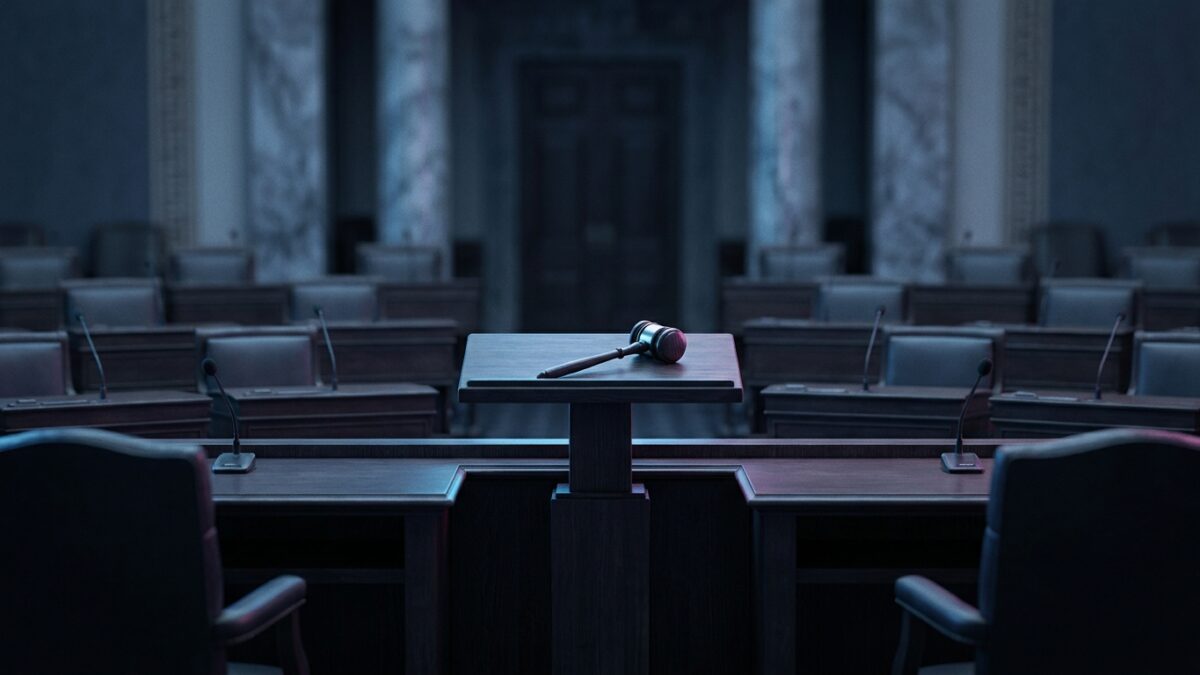
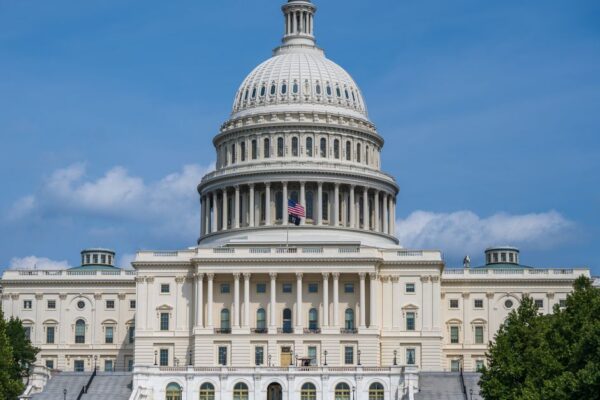
The US Senate is preparing for a cloture vote on the CLARITY Act, the long-awaited crypto market structure bill, in a session that could determine whether Washington delivers comprehensive digital asset rules this decade or watches the effort collapse into political limbo. The vote needs 60 votes — a three-fifths supermajority — to overcome a filibuster, and if it fails, the bill’s fate could be decided by a Congress that looks very different in 2027.
A narrow window before the clock resets
The vote is scheduled for the Tuesday following Sept. 9, 2026, as the Senate returns from recess with less than 36 legislative days remaining before the new Congress convenes in 2027. That is a remarkably tight runway for legislation that would rewrite how digital assets are classified, traded and overseen in the United States.
The bill’s momentum traces back to the 2024 elections, when Republicans secured a legislative trifecta that allowed them to push through the GENIUS Act, the stablecoin framework that became the first major piece of federal crypto legislation. CLARITY was meant to be the follow-through — a broader structure bill addressing how tokens are treated by regulators, and who has jurisdiction over what. Senator Cynthia Lummis, one of the chamber’s most vocal crypto advocates, has warned that if this attempt fails, the next realistic opportunity may not arrive until 2030. Senator John Thune, as majority leader, and Senator Sherrod Brown, a longtime critic of loosely regulated digital asset markets, sit on opposite sides of a debate that has never cleanly split along party lines.
All 435 House seats and 33 Senate seats are up for grabs in the midterm elections, and control of either chamber could flip. That single fact is what gives this cloture vote its outsized stakes: a bill that fails now does not simply get rescheduled — it risks being rewritten from scratch, or abandoned altogether, under a Congress with different priorities.
What a stalled bill would actually mean
If the Senate cannot deliver 60 votes, the practical effect is not an immediate regulatory vacuum — it is a prolongation of the current patchwork. SEC Chair Paul Atkins and CFTC Chair Michael Selig, both Trump appointees, have signaled they intend to press ahead with digital asset rulemaking through their agencies regardless of what Congress does. That means the industry would continue operating under a mix of enforcement actions, agency guidance and case-by-case interpretation rather than a single statutory framework spelling out which assets fall under securities law and which fall under commodities law.
That distinction matters far beyond Capitol Hill. Exchanges, custodians and token issuers have spent years asking for exactly the kind of jurisdictional clarity CLARITY promises, precisely because uncertainty translates into compliance costs and market exits. The pattern is already visible overseas: Bitget’s decision to exit the Japanese market came as Tokyo tightened its own exchange rules, and Bithumb’s choice to push its IPO back to 2028 after an internal control overhaul shows how regulatory friction can reshape corporate timelines even for established platforms. A US market without settled rules risks similar disruptions, only at a scale that touches the world’s largest crypto economy.
Money is already flowing to shape the outcome. Fairshake, a crypto-focused political action committee backed by Coinbase and Ripple Labs, has spent roughly $189,000 through an affiliated PAC on ads supporting Representative Jake Auchincloss, part of a broader strategy of rewarding or punishing candidates based on their crypto voting records. The PAC’s record is mixed: it helped defeat Sherrod Brown in a previous race, yet lost a Democratic Senate primary fight in Illinois, and Brown himself is now running again in a special election against Jon Husted. That track record suggests crypto-aligned spending can move individual races but has not yet proven it can guarantee legislative outcomes.
What to watch next
Even if CLARITY clears the Senate, it would still need to pass the House and be signed by the president, or survive a two-thirds override in both chambers if vetoed — a high bar under any political configuration. Readers tracking this story should watch several concrete markers: whether the cloture vote actually reaches 60, how Thune manages floor time against the shrinking legislative calendar, whether Atkins and Selig announce independent rulemaking timelines as a hedge against congressional inaction, and how midterm contests involving Fairshake-backed spending — including the Brown-Husted race — play out. As institutional players continue building products that assume regulatory clarity is coming, such as Tether and Fasanara’s new private credit fund, the gap between market ambition and legal certainty remains the central risk for the industry heading into 2027.
Source: Cointelegraph
This content is for informational purposes only and does not constitute financial or investment advice.


Create a free account to comment and earn rewards.
Create account Log in