
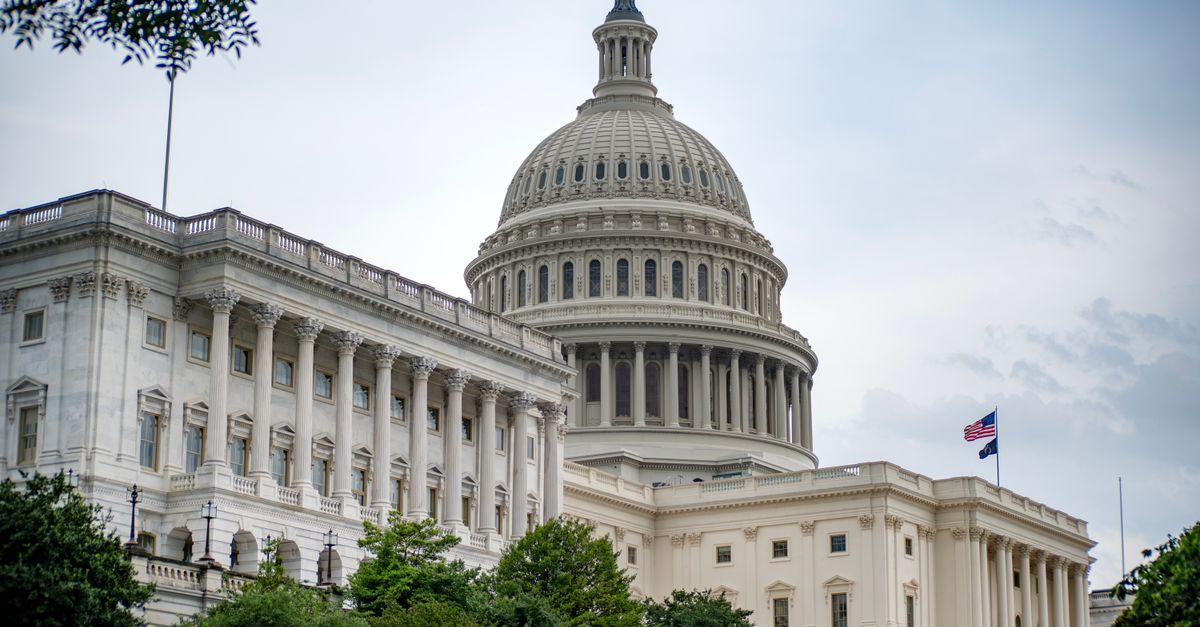
The U.S. Senate has yet to file a motion to proceed on the Digital Asset Market Clarity Act, the chamber’s chief attempt to write comprehensive federal rules for digital assets, with roughly a week left before lawmakers leave Washington for their August recess. The holdup: an unresolved ethics provision that has stalled negotiations between Capitol Hill and the White House for weeks.
Senators Ruben Gallego and Thom Tillis, who have been working across the aisle to salvage the bill, sent a revised ethics compromise to the White House earlier this week. As of Friday afternoon, the administration had not responded. That silence leaves the bill’s near-term fate uncertain just as the legislative calendar narrows.
Why Ethics Became the Bottleneck
The Clarity Act is designed to answer a question that has vexed the U.S. crypto industry for years: which federal regulator, if any, has clear jurisdiction over digital asset markets, and under what rules. Multiple provisions in the bill have required negotiation, including how stablecoin issuers must hold reserves and whether they can pay yield to holders, the scope of law enforcement authorities over digital asset transactions, and how jurisdiction should be split between the Commodity Futures Trading Commission and other regulators.
According to the facts provided, those disputes are considered comparatively easier to resolve than the ethics language, which has become the central sticking point. Ethics provisions in legislation like this typically address conflicts of interest — for instance, restrictions on officials or their families holding financial stakes in the assets or companies a bill would newly regulate. The specifics of the Gallego-Tillis compromise were not disclosed, but the fact that it required a second, revised version suggests the first attempt did not satisfy the White House or other stakeholders.
Procedurally, advancing the Clarity Act requires the Senate to first file and adopt a motion to proceed, then clear a cloture vote before any floor vote on passage can occur. A procedural cloture vote is expected this week, which — if successful — could set up a passage vote when the Senate reconvenes in September. If the motion to proceed is not filed before recess, the bill’s timeline slips by at least several weeks, pushing any resolution closer to the fall and, by extension, closer to the 2026 midterm elections.
What a Delay Means for the Market
The stakes described in the source material go beyond legislative process. A report published July 30, 2026 by the Crypto Council for Innovation, an industry advocacy group, found that 80% of crypto developers reportedly operate outside the United States and that 88% of crypto market share is offshore. Those figures underscore a concern the industry has raised repeatedly: without a clear domestic regulatory framework, developers and trading activity continue migrating to jurisdictions that have already established rules, while the U.S. debates the fundamentals.
For the broader digital asset industry, the Clarity Act represents the most significant chance in years to get statutory clarity rather than relying on regulation-by-enforcement or shifting agency guidance. A framework that defines which assets are commodities, which are securities, and how stablecoins must be backed would give exchanges, custodians and issuers a fixed set of rules to build against — something the industry has lobbied for through multiple election cycles.
The political dimension adds another layer. Crypto-focused political action committees are reportedly tracking how senators vote, information that is expected to feed into campaign funding decisions ahead of the 2026 midterms. That means the ethics standoff is not merely a technical drafting dispute; it is unfolding in a legislative environment where the vote itself could become a factor in November’s races.
What to Watch
- Whether the Senate files a motion to proceed before recess begins, or whether the bill’s timeline slips into September by default.
- The outcome of this week’s procedural cloture vote, which determines whether a September passage vote becomes possible.
- Whether the White House responds to the Gallego-Tillis ethics compromise, and what specific language it accepts or rejects.
- How the stablecoin reserve/yield, law enforcement authority, and CFTC jurisdiction provisions are finalized once ethics is resolved.
- Whether crypto PAC spending tied to the vote becomes visible in the run-up to the 2026 midterms.
Source: CoinDesk
This content is for informational purposes only and does not constitute financial or investment advice.


Create a free account to comment and earn rewards.
Create account Log in