
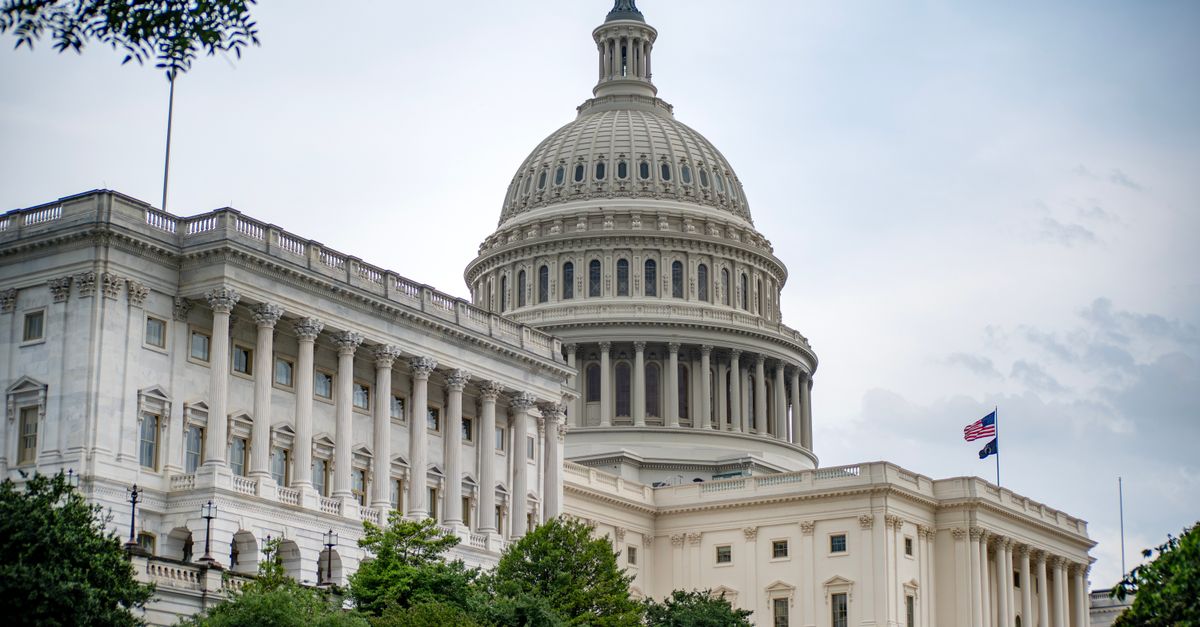
A U.S. congressional committee is set to vote Wednesday on legislation that would transform President Donald Trump’s executive order creating a Strategic Bitcoin Reserve into permanent federal law. The move, if successful, would mark the first time Congress moves to lock a bitcoin policy into statute rather than leaving it dependent on the preferences of whoever occupies the White House.
The stakes are procedural but far-reaching. Executive orders carry the force of law only as long as a president chooses to keep them, or until a successor rescinds them. Trump used that executive tool earlier to establish the reserve, directing the federal government to hold bitcoin as a strategic asset. That order gave the policy immediate effect, but also immediate fragility: a future administration hostile to digital assets could unwind it with a single signature, no congressional input required.
Why an Executive Order Was Never Enough
This vulnerability is precisely what the new bill aims to close. By codifying the reserve into law, lawmakers would require any future repeal to go through Congress itself, a far higher bar than a presidential pen stroke. For an asset class that has spent over a decade lobbying for institutional legitimacy, that shift from executive discretion to statutory footing represents a meaningful upgrade in durability, even if it says nothing about the reserve’s size, composition, or investment performance.
The context matters here. Executive orders are inherently political instruments, tied to the priorities of a single administration. Bitcoin advocates have long argued that meaningful government engagement with the asset needs to survive election cycles to be taken seriously by markets, foreign governments, and institutional allocators. A reserve that can vanish with a change of administration sends a different signal than one anchored in law that would require a legislative majority to dismantle.
What Legislative Permanence Would Actually Change
If the committee vote succeeds and the bill eventually clears both chambers, the practical effect would be less about the reserve’s day-to-day operations and more about the credibility of the policy over time. Institutional stability is the operative phrase here: statutory backing turns what was a discretionary executive project into a fixture of U.S. financial policy, subject to the ordinary legislative process rather than the shifting priorities of the executive branch.
This distinction is not abstract. Financial institutions, foreign sovereign funds, and other governments weighing their own digital-asset postures often calibrate their confidence in U.S. policy based on how entrenched it appears. An executive order is a signal of intent. A federal statute is a commitment that carries costs to reverse — political costs, procedural costs, and the need to build a new legislative coalition. That asymmetry is exactly why proponents are pushing to move the reserve from one category to the other before any change in administration.
It is worth noting what the committee vote does not resolve. The facts available do not indicate how much bitcoin the reserve currently holds, how it is funded, or what oversight mechanisms would accompany a statutory version of the program. Nor does a committee vote guarantee passage; it is one step in a legislative process that still requires floor votes and, in many cases, reconciliation between House and Senate versions before any bill reaches the president’s desk. Congress’s track record on crypto legislation this year offers a caution against assuming smooth passage. Separate efforts, including the CLARITY Act, have faced their own turbulence, from a family-related loophole that stalled momentum days before a Senate vote to a rewritten version that triggered pushback hours before a cloture vote. Even as a White House adviser voiced confidence ahead of that vote, state attorneys general were simultaneously urging senators to reject the bill outright, underscoring how contested crypto policy remains even within the same legislative session.
What to Watch Next
The immediate marker is the committee vote itself on Wednesday. A favorable outcome would send the bill toward further committee or floor consideration; a failure or delay would leave the reserve dependent on the executive order status quo, with all the reversibility that implies. Beyond that, several things merit attention in the coming weeks:
- Whether the bill advances to a full floor vote in either chamber, and on what timeline.
- Any amendments introduced during committee markup that could alter the reserve’s scope or governance.
- How this effort intersects with other pending crypto legislation, including the CLARITY Act debates playing out in parallel.
- Statements from the Trump administration on whether it supports codification or prefers retaining executive flexibility.
For now, the reserve remains a creature of executive authority — significant in symbolism, but legally provisional. Wednesday’s committee vote is the first concrete test of whether Congress is willing to change that.
Source: CriptoNoticias
This content is for informational purposes only and does not constitute financial or investment advice.


Create a free account to comment and earn rewards.
Create account Log in