
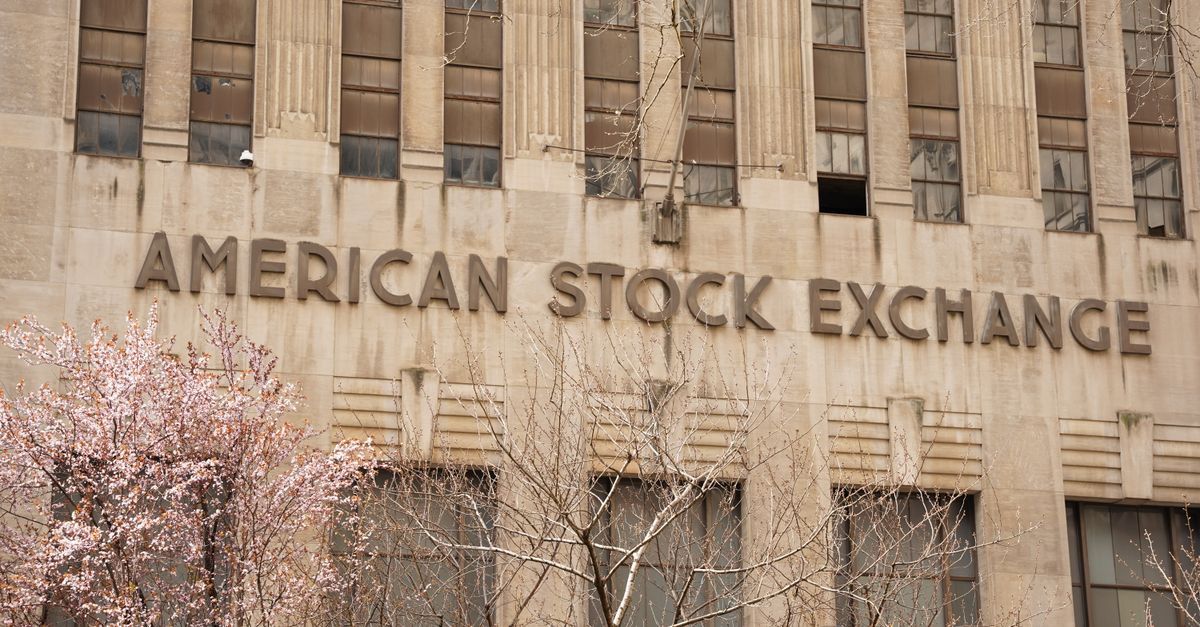
The Securities and Exchange Commission has cleared a path for tokenized versions of actual U.S. stocks to trade directly on blockchain networks, sidestepping the exchange registration rules that have long kept such trading confined to traditional venues. The agency’s new “Innovation Exemption,” announced Thursday under Chairman Paul Atkins, lets qualifying platforms — dubbed Tokenized Securities Venues, or TSVs — use automated market makers and public blockchain liquidity pools to facilitate trading, without registering as national securities exchanges. It took effect immediately and will remain in place for up to five years.
This is not a minor technical tweak. It is the first time the SEC has formally sanctioned onchain trading of equities that carry the same legal rights as shares bought through a conventional broker — dividends, voting rights, the works. That distinction matters enormously, because it separates this initiative from the synthetic, price-tracking tokens that have circulated for years on offshore crypto exchanges, instruments that mimic a stock’s price movement without conferring any of the ownership rights that come with it.
Why Washington moved now
The timing is not incidental. The exemption arrives just days after the Senate failed to advance the CLARITY Act, the market-structure bill that industry groups had hoped would finally give digital-asset markets a comprehensive federal rulebook. That vote, tangled up in an ethics dispute and other political friction, left crypto’s legislative path stalled once again — the latest in a string of setbacks that has left the sector’s federal rulebook in limbo, as the bill has now failed to advance on multiple occasions this month.
With Congress unable to deliver a durable statute, the SEC appears to be using its existing exemptive authority to create a working framework in the meantime. Chris Hayes of the Coalition for Tokenized Markets and Thorn Run Partners is among those tracking the move as a sign the agency is willing to act unilaterally rather than wait indefinitely for lawmakers. The frustration on the industry side after the Senate vote was evident, with some lobbying voices vowing to make the stalled legislation a political issue heading into the midterms. The SEC’s exemption doesn’t resolve that fight, but it does give tokenization advocates a concrete, near-term win even as the broader legislative fight for a permanent structure to protect the crypto industry from an ever-changing regulatory landscape remains stalled.
What the guardrails actually do
The exemption is not an open door. The SEC has built in several constraints designed to limit systemic risk while the framework is tested. Issuers of underlying stock get 30 days to object before a third party can tokenize their shares, effectively giving companies a veto over unauthorized onchain versions of their own stock. Regulators have also capped how many stocks any single TSV can list, and how much of a stock’s daily trading volume can flow through a tokenized venue rather than traditional exchanges. Liquidity providers, meanwhile, get relief from dealer-registration requirements that would otherwise apply to firms making markets at scale.
Together, these limits suggest the SEC is treating this as a controlled experiment rather than a wholesale deregulation of equity trading. The agency has explicitly framed the exemption as temporary, a bridge measure meant to generate real-world data pending either permanent rulemaking or future legislation — an implicit acknowledgment that Congress, not the SEC, is supposed to be writing the durable rules here.
What it means for markets and what to watch
For traditional exchanges, the exemption introduces a new category of competitor: DeFi-style venues that can list real, rights-bearing equities without carrying the full regulatory weight of an exchange license. For crypto platforms, it is a validation that has eluded them for years — a signal that U.S. regulators are willing to let real securities, not just synthetic proxies, move through automated liquidity pools on public blockchains.
Several things are worth watching as this framework rolls out. First, how many venues actually qualify as TSVs, and how quickly they launch listings once issuers have had their 30-day objection window. Second, whether the volume and listing caps prove restrictive enough to matter, or whether they are set loosely enough to allow meaningful trading activity to migrate onchain. Third, how traditional exchanges respond competitively, and whether pressure builds for Congress to revisit the CLARITY Act, or a similar bill, given that the SEC has explicitly cast this exemption as a stopgap. Broader questions about how tokenized markets interact with traditional finance are already surfacing elsewhere; the Bank of England, for instance, has flagged how stablecoins are increasingly able to move Treasury markets, a reminder that as tokenized instruments proliferate, their macro-financial footprint tends to grow with them. Finally, watch whether other regulators, domestic or international, follow the SEC’s lead or take a more cautious stance toward onchain trading of real securities.
Source: Decrypt
This content is for informational purposes only and does not constitute financial or investment advice.


Create a free account to comment and earn rewards.
Create account Log in