
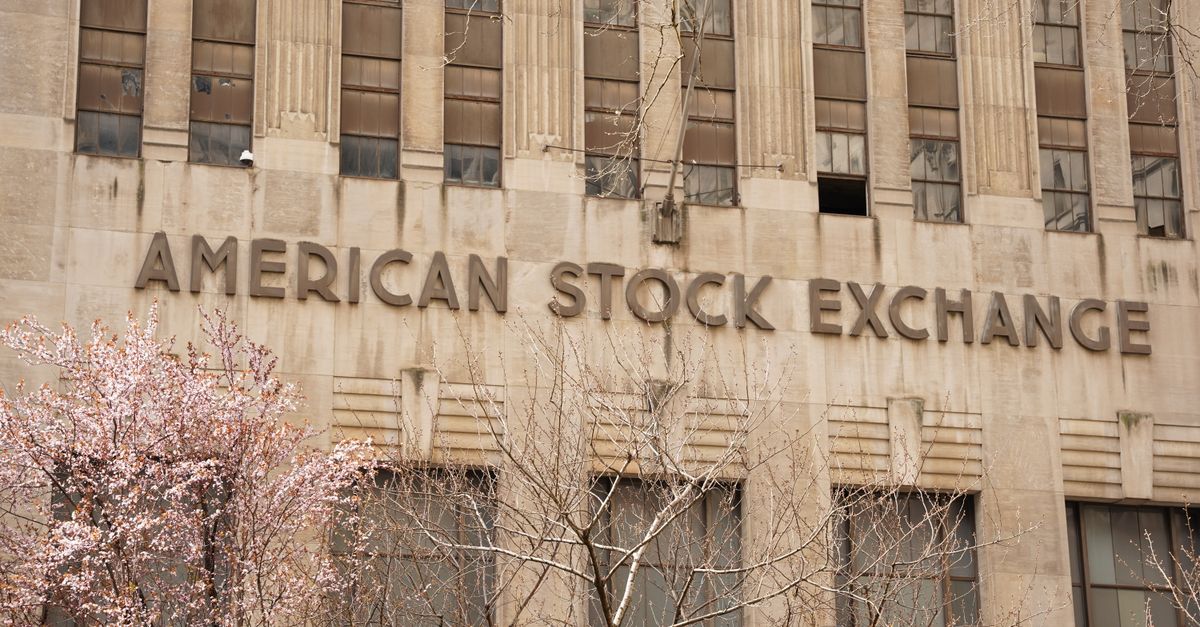
The U.S. Securities and Exchange Commission has opened a five-year regulatory window for trading tokenized versions of U.S. stocks on public blockchains, and Wall Street analysts already have a short list of likely winners: Coinbase, Robinhood and Circle. Goldman Sachs and Citizens flagged the three companies as best positioned to benefit from the new framework, while traditional exchange operators Nasdaq and Intercontinental Exchange, the parent of the NYSE, are expected to feel little competitive pressure from it.
What the SEC actually approved
The exemption lets tokenized shares of U.S. companies trade through automated market makers, the algorithm-driven liquidity pools that underpin most decentralized exchanges, rather than through the order-book systems that dominate traditional markets. Crucially, the tokens must preserve real shareholder rights — dividends and voting among them — distinguishing them from synthetic products that merely track a stock’s price. The SEC also built in guardrails: caps on trading volume and limits on how many stocks can be listed under the program, plus a right for issuers to object before their shares are tokenized by outside parties. The whole framework sunsets in five years, giving regulators room to study the model before deciding whether to make it permanent.
This is not happening in isolation. It lands amid a broader scramble by U.S. regulators to define rules for crypto-adjacent markets without a comprehensive statute in place, a piecemeal approach detailed in how the SEC and CFTC have been improvising crypto rules without the Clarity Act. Tokenized equities join a growing list of experimental products, including single-stock perpetual futures that Coinbase and Kalshi have separately pursued through Coinbase’s push for U.S. approval of single-stock perpetual futures and Kalshi’s own filing for stock perpetual futures, which followed Kraken into that market.
Why Coinbase, Robinhood and Circle stand out
Coinbase already runs a tokenized-equity product that mirrors shareholder rights and dividends of the underlying stock, and CEO Brian Armstrong has said voting rights are coming soon — putting the company ahead of the compliance curve on the SEC’s core requirement. The company also has institutional custody operations, a tokenization infrastructure unit called Coinbase Tokenize, and its own Ethereum-based blockchain, Base, giving it multiple points of entry into onchain securities markets. One wrinkle: Coinbase’s exchange relies on central limit order books, the standard matching engine for stocks and most crypto trading, which is structurally different from the AMM model the SEC exemption requires. That likely means building new infrastructure or routing trades through AMM-based decentralized exchanges to participate fully.
Robinhood’s position is more complicated. Its existing offshore stock tokens function as derivatives without full ownership rights, meaning they do not meet the new framework’s standard. CEO Vlad Tenev has said the company plans to add share redemption and voting features to close that gap. The stakes were underscored this month when AMC Entertainment’s chief executive criticized Robinhood over unauthorized AMC-linked stock tokens — exactly the kind of dispute the SEC’s new issuer opt-out right is designed to prevent going forward. Robinhood also operates its own blockchain, Robinhood Chain, built on Arbitrum, giving it in-house infrastructure to adapt to the new rules.
Circle’s role is less direct but still significant. Its USDC stablecoin is widely seen as a natural settlement and collateral asset for onchain securities trading, since AMM-based markets need a reliable, liquid asset to price and settle trades against. That positions Circle as an infrastructure beneficiary even without issuing tokenized stocks itself, and it indirectly strengthens Coinbase given the exchange’s commercial ties to USDC.
What comes next
Goldman Sachs was careful to temper expectations: trading caps, the limited number of eligible stocks, and issuer opt-outs mean these new AMM-based venues are unlikely to pull meaningful volume away from incumbents like Nasdaq and the NYSE in the near term. The five-year clock is really a testing period, and several concrete markers will show whether the experiment is working.
- Whether Coinbase, Robinhood or other platforms actually launch AMM-compatible tokenized-stock products under the exemption, rather than continuing to operate order-book systems on the side.
- How quickly Robinhood adds the redemption and voting mechanics needed to bring its existing stock tokens into compliance.
- Whether issuers use their new opt-out right to block unauthorized tokenization, following the friction seen with AMC Entertainment.
- How much of the settlement and collateral activity in onchain equity markets flows through USDC or competing stablecoins.
- Whether trading volumes under the exemption stay within the SEC’s caps or push regulators toward loosening them before the five years are up.
The broader question is what kind of market infrastructure risk this new plumbing introduces. Institutional crypto systems have already shown vulnerabilities elsewhere, as seen in the breach at Haruko that exposed weaknesses in institutional crypto infrastructure, a reminder that new custody, settlement and matching systems built for tokenized securities will need to prove themselves operationally secure, not just legally compliant.
Source: CoinDesk
This content is for informational purposes only and does not constitute financial or investment advice.


Create a free account to comment and earn rewards.
Create account Log in