
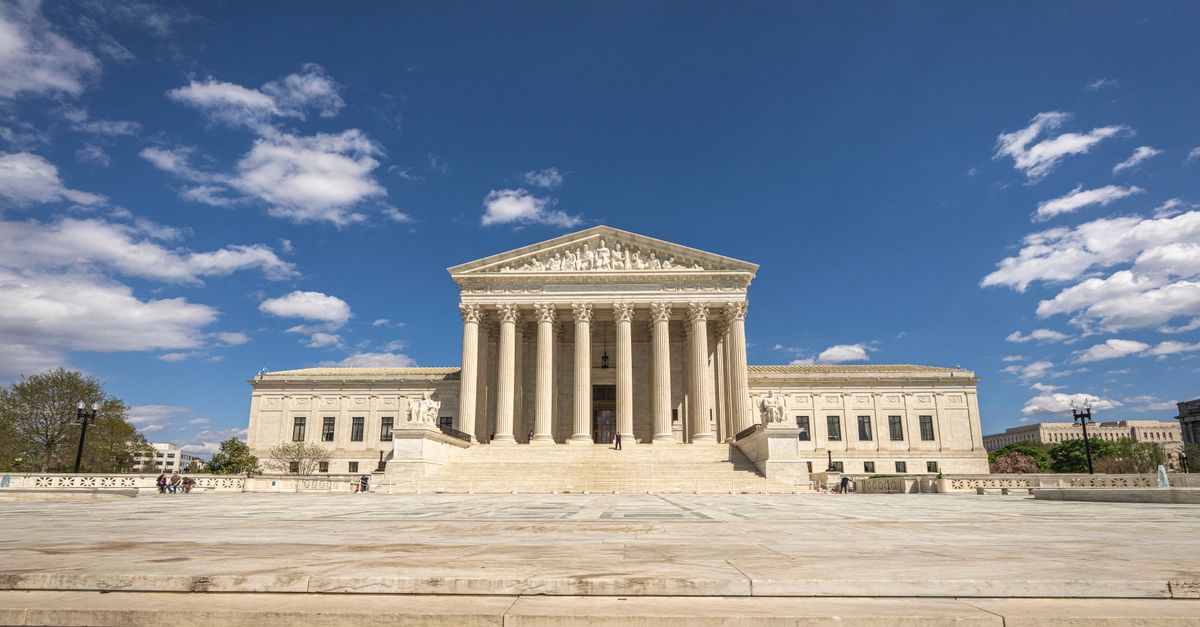
A coalition of state lawmakers has escalated a legal fight over who gets to police prediction markets in the United States, filing an amicus brief that urges the Supreme Court to take up New Jersey’s case against Kalshi. The outcome could decide whether state gaming regulators or federal agencies such as the Commodity Futures Trading Commission hold authority over sports-related event contracts — a question with consequences far beyond one company.
The National Council of Legislators from Gaming States, known as NCLGS, filed its brief on a Tuesday in support of a petition that New Jersey submitted to the Supreme Court on September 2. That petition asks the justices to review a decision from the US Court of Appeals for the Third Circuit, which had ruled in a dispute between New Jersey and Kalshi. Kalshi now has until November 9 to respond to the petition, setting up a window in which the Supreme Court will decide whether to hear the case at all.
A Fight Over Jurisdiction, Not Just One Platform
Kalshi operates as a federally regulated exchange offering event contracts — financial instruments that let users take positions on the outcome of real-world events, including sports contests. Because these contracts are traded on a platform overseen by the CFTC, Kalshi has argued it operates under federal law and should not have to answer to state-by-state gaming rules. A company spokesperson has previously said Kalshi cannot realistically be regulated by 50 different state regulators, a position that captures the core of its legal defense.
New Jersey sees it differently. State gaming authorities argue that sports-related event contracts function much like traditional sports betting, an activity states have historically licensed and taxed within their own borders. The Third Circuit’s ruling in this dispute is what pushed New Jersey to seek Supreme Court review, and NCLGS’s amicus brief is designed to reinforce that request by showing the Court that the case carries weight well beyond a single state or a single company.
Why State Regulators Are Worried
NCLGS’s brief lays out a warning: if Kalshi prevails, states could lose their power to regulate sports betting whenever it is repackaged as a prediction market or event contract. The lawmakers argue this would not stay confined to one platform. Traditional casinos and other licensed gaming operators, the brief contends, would likely seek the same kind of federal exemption Kalshi is claiming, effectively creating a parallel, federally supervised betting market that operates outside the licensing, consumer-protection and tax frameworks states have built over years.
Notably, the brief does not directly engage with Kalshi’s central counterargument — that event contracts traded on federally regulated exchanges fall under the CFTC’s exclusive jurisdiction and are therefore outside the reach of state gaming law entirely. That omission leaves the core legal question open for the Supreme Court, or lower courts, to resolve on the merits rather than through political framing. It also underscores that this is fundamentally a turf dispute between two layers of regulation that were built for different purposes: state gaming law designed around licensed betting, and federal commodities law designed around derivatives and futures markets.
The stakes echo tensions playing out elsewhere in the crypto and derivatives sector, where regulators have flagged risks tied to newer trading structures. The CFTC itself has already warned about manipulation risks in so-called mention market prediction contracts, a sign that federal regulators are actively scrutinizing this corner of the market even as they defend their jurisdiction over it.
What Comes Next
The immediate procedural marker is November 9, when Kalshi must file its response to New Jersey’s petition. After that, the Supreme Court will decide whether to grant certiorari — that is, whether to hear the case at all. Only a small fraction of petitions are accepted each term, so the Court’s decision on whether to take up the dispute is itself a significant signal, regardless of how it might eventually rule on the merits.
Readers should watch for several things: whether the Court agrees to hear the case, how it frames the jurisdictional question if it does, and how other states respond in the interim. Gaming regulators in other jurisdictions may file their own actions against Kalshi or similar platforms while the Supreme Court question remains unresolved. The case also arrives amid a broader wave of regulatory repositioning around federally chartered exemptions, seen recently in areas like tokenized US stock exemptions, suggesting companies across finance are increasingly testing where federal frameworks can supersede state-level rules. Kalshi’s own expansion — including a separate filing for US stock perpetual futures alongside Coinbase — shows the company is pushing this federal-first strategy on multiple fronts simultaneously, making the outcome of the New Jersey case a potential bellwether for how far that strategy can go.
Source: Cointelegraph
This content is for informational purposes only and does not constitute financial or investment advice.


Create a free account to comment and earn rewards.
Create account Log in