
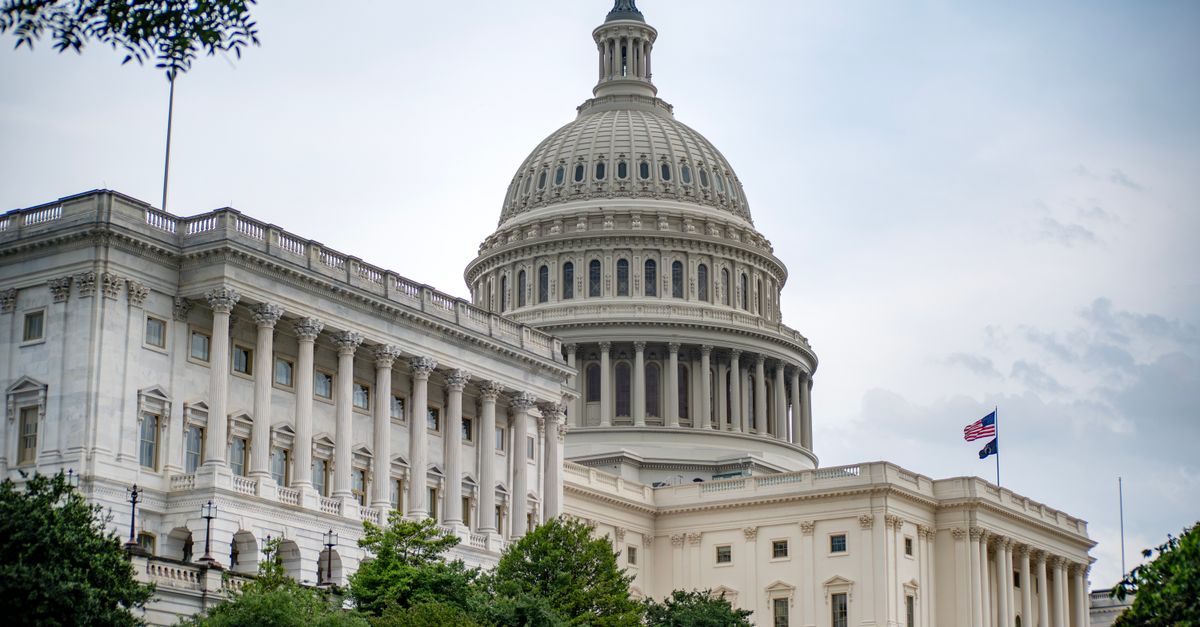
The U.S. Senate failed on Tuesday to advance the Clarity Act, the most comprehensive attempt yet to write federal rules for digital-asset markets, and the industry’s political arm wasted no time turning the defeat into a campaign threat. Stand With Crypto, the advocacy group backed by Coinbase, said it would fold every senator’s vote on the bill into its public scorecards ahead of the November 2026 midterms, effectively promising to make crypto policy a line item in re-election campaigns nationwide.
The cloture vote needed 60 senators to move forward and did not get there, freezing a bill that would have split oversight of digital assets between the Securities and Exchange Commission and the Commodity Futures Trading Commission — the two agencies that have spent years arguing, in court and in Congress, over which of them actually has jurisdiction over tokens, exchanges and trading platforms.
A Bill Undone by Ethics and Timing
The Clarity Act’s collapse was not a simple partisan headcount. As detailed in coverage of the Trump ethics dispute that derailed the crypto bill, negotiations broke down over how the legislation would handle conflicts of interest, developer protections, and oversight of trading businesses. Republicans had released a revised version of the bill on Sunday in an attempt to salvage support, and Democrats countered with their own changes the very next day — a scramble that left little room for the kind of bipartisan buy-in a 60-vote threshold demands. That last-minute rewrite, described in reporting on how Senate Republicans reworked the bill before the cloture vote, ultimately wasn’t enough, and the rushed process itself drew criticism, with some lawmakers and advocates framing the redraft as a rewritten bill facing revolt hours before the vote.
Complicating matters further, banking industry groups had been separately pressing lawmakers to tighten restrictions on stablecoin rewards, arguing that yield-bearing stablecoins risk pulling deposits out of the traditional banking system and undermining banks’ capacity to lend. That fight over stablecoins sat alongside the ethics disputes as another undercurrent pulling votes away from consensus.
Why a Stalled Bill Matters Beyond Washington
For an industry that has spent nearly a decade operating under a patchwork of state licensing regimes, court rulings and agency enforcement actions, the Clarity Act represented a rare shot at a single, durable federal rulebook. Its failure to advance doesn’t kill the effort outright — cloture votes can be revisited — but it does mean exchanges, token issuers and institutional investors continue operating without clear statutory lines showing which federal regulator has authority over which products.
That uncertainty has real consequences. Firms that want to launch new products in the U.S. must still guess whether the SEC or the CFTC — or both — will claim jurisdiction, a dynamic that has already shaped how companies structure token sales, custody arrangements and trading venues. The market’s reaction was immediate: shares tied to the sector moved on the news, part of a pattern where crypto stocks have tumbled whenever regulatory clarity efforts stall.
Stand With Crypto’s response is where this story shifts from a legislative footnote to a political one. Executive director Mason Lynaugh framed the vote’s failure in explicitly electoral terms, citing an estimated 67 million crypto-owning Americans as a voting bloc the group intends to mobilize. The organization pointed to its own numbers as evidence it can do so: nearly 50,000 calls and emails sent to Congress by supporters in August alone, and a claimed base of 3 million grassroots advocates. The group also noted its prior endorsements of House candidates, signaling that scorecards and endorsements — tools long used by single-issue lobbies on guns, abortion and the environment — are now squarely part of crypto’s political playbook.
What to Watch Before November
- Whether Senate leadership schedules another cloture attempt on the Clarity Act, or on a further revised version, before the midterm campaign season fully takes hold.
- How Stand With Crypto’s scorecards get used in individual Senate and House races, and whether crypto-owning constituents respond to targeted messaging tied to specific votes.
- Whether banking groups’ push for stricter stablecoin-reward limits resurfaces as a standalone measure or gets folded back into any future market-structure bill.
- Whether the SEC and CFTC take independent regulatory action in the absence of legislation, given the continued lack of statutory clarity on jurisdiction.
The broader pattern, visible across multiple accounts of this week’s vote, is one of a bill that keeps almost crossing the finish line only to be pulled back by disputes that have little to do with market structure itself — ethics rules, conflicts tied to political figures, and turf battles between agencies. Until those disputes are resolved, the industry’s federal rulebook remains, as one recurring headline put it, stalled again.
Source: Decrypt
This content is for informational purposes only and does not constitute financial or investment advice.


Create a free account to comment and earn rewards.
Create account Log in