
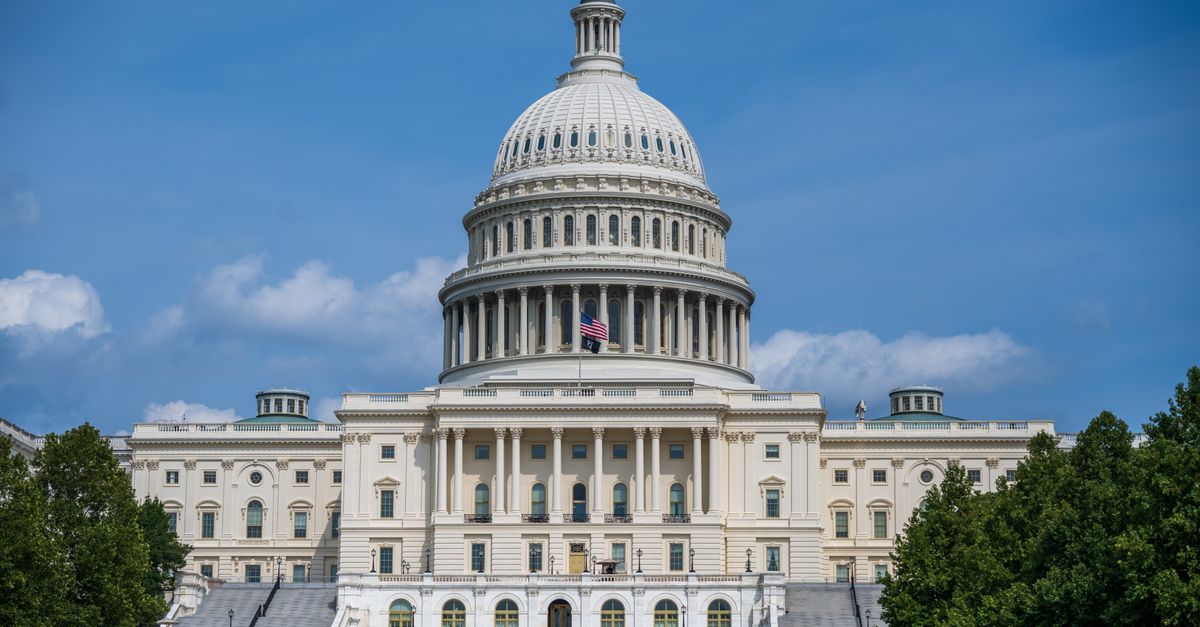
Senate Republicans released a final revised draft of the CLARITY Act on Monday, folding in more than 120 changes demanded by Democrats just a day before a scheduled cloture vote that will determine whether the most ambitious US crypto market-structure bill to date moves forward. The vote, set for Tuesday at 2:15 p.m., needs 60 votes to succeed — meaning at least some Democratic support is required, and the scale of the concessions signals how close the count may be.
A bill built for a bipartisan bar
The CLARITY Act, formally H.R. 3633, is the Senate’s attempt to do something Congress has never managed: draw clear jurisdictional lines between the Securities and Exchange Commission and the Commodity Futures Trading Commission over digital assets. For years, the industry has operated under a patchwork of enforcement actions and competing agency claims rather than a statute written specifically for crypto markets. This bill would change that, defining which tokens count as digital commodities under CFTC oversight and which remain securities under the SEC.
The path here has not been smooth. In July, seven Democratic senators — including Ruben Gallego, Mark Warner and Cory Booker — publicly objected that an earlier draft lacked adequate safeguards on ethics, consumer protection, illicit finance and conflicts of interest. That objection effectively froze momentum on the bill for weeks, and it followed a separate controversy detailed in reporting on a family-related loophole that had stalled the legislation just days before this week’s vote. Senate Republicans Cynthia Lummis, Tim Scott and John Boozman led the negotiations to answer those objections, and Monday’s draft is the product of that back-and-forth.
What actually changed
The 126 substantive revisions touch nearly every area Democrats flagged. On ethics, the bill now imposes penalties of 20% of transaction consideration or $500,000, whichever is greater, for violations — provisions that take effect 360 days after enactment, or 60 days after a final implementing rule, whichever comes sooner. That timeline matters because it sets a hard deadline for regulators to finish rulemaking rather than letting oversight linger in limbo.
Consumer-facing protections were also tightened. A new 72-hour holding period applies to certain crypto kiosk transactions for new customers, a measure aimed at slowing down the kind of rapid, hard-to-reverse transfers that have made physical crypto ATMs a target for scams. Fundraising rules under the bill’s Regulation Crypto framework were made more conservative too: the annual cap drops to $50 million from $75 million, a new $200 million lifetime limit is introduced, and any raise above $25 million now requires audited financial statements. The ownership threshold triggering resale restrictions was also lowered, from 5% to 3%, extending scrutiny to a wider set of insiders and large holders.
On the illicit-finance side, the draft authorizes $150 million for a new CFTC Office of the Retail Commodity Advocate and another $150 million for FinCEN to expand its anti-money-laundering capacity — funding commitments that suggest regulators anticipate a substantial compliance workload once the framework takes effect. Developer protections were narrowed rather than expanded: the final text removes an extension of legal shields to the criminal money-transmission statute, 18 U.S.C. 1960, while keeping civil Bank Secrecy Act protections in place. The CFTC also gains new rulemaking authority over affiliate conflicts of interest at digital commodity exchanges, and the bill explicitly preserves both SEC anti-fraud authority and existing state consumer-protection laws — a nod to concerns that a federal framework might otherwise pre-empt state regulators entirely.
Stablecoin issuers get a notable concession too: a circuit-breaker authority allowing regulators to intervene during instability expires 18 months after enactment, giving the provision a built-in sunset rather than permanent standing. That detail lands alongside separate, unrelated moves by traditional banks to build their own tokenized deposit and stablecoin products, a trend already reshaping how lenders think about digital payments, and it underscores how much regulatory certainty stablecoin issuers are seeking as the market matures.
Why this matters beyond Washington
A framework of this scope would be consequential well past US borders, since American market-structure rules tend to set informal benchmarks for other jurisdictions weighing their own crypto legislation. For issuers like Circle, whose recent expansion moves — including a $400 million acquisition aimed at extending stablecoin market access — depend partly on regulatory clarity, a defined federal framework would remove a persistent source of uncertainty. It would also give exchanges, custodians and token issuers a rulebook to build compliance programs around, rather than inferring boundaries from enforcement actions after the fact.
It’s worth being precise about what Tuesday’s vote actually decides. Passing cloture does not pass the bill — it clears the procedural hurdle to allow debate and amendments to proceed on the Senate floor. Final passage, reconciliation with the House-passed version, and presidential signature would all still lie ahead. Even so, a successful cloture vote would mark the furthest a comprehensive crypto market-structure bill has advanced in Congress, and a failed one would send negotiators back to the table with an uncertain runway before any future legislative window opens.
What to watch next
- Whether Tuesday’s cloture vote reaches the 60-vote threshold, and which senators cross party lines.
- How amendments proposed during subsequent floor debate might alter the ethics, stablecoin, or fundraising provisions.
- Whether the CFTC and FinCEN begin preparatory work on the funded offices even before final passage.
- How the bill’s jurisdictional split between the SEC and CFTC is reconciled with the House’s version of digital-asset legislation.
Source: CryptoSlate
This content is for informational purposes only and does not constitute financial or investment advice.


Create a free account to comment and earn rewards.
Create account Log in