
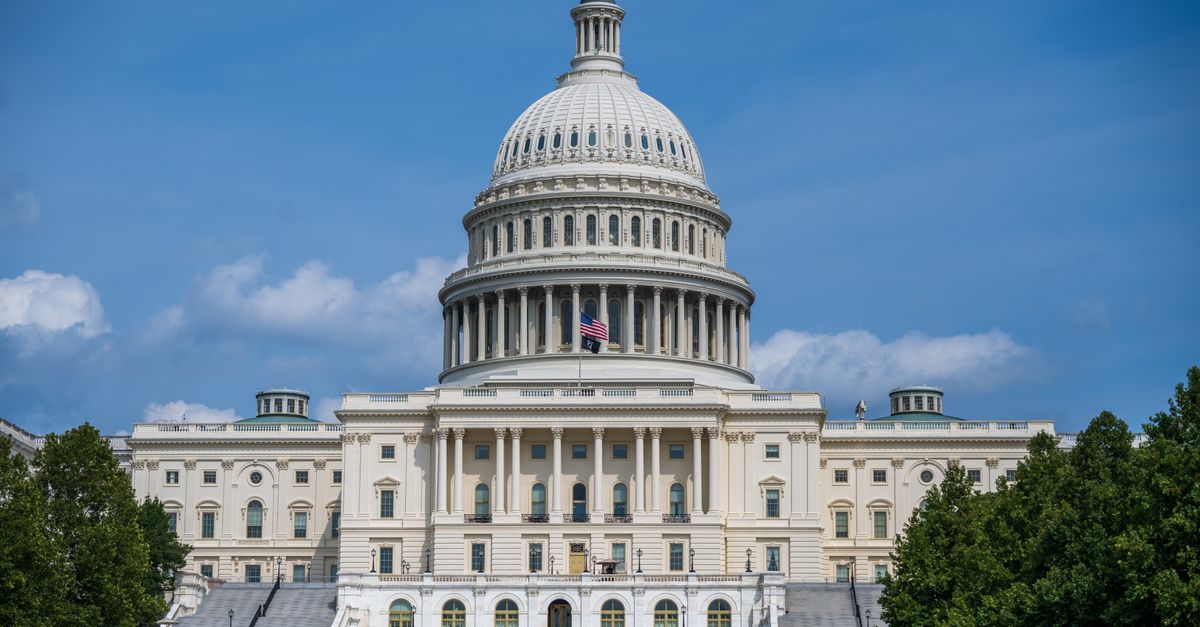
Congress’s failure to pass the Digital Asset Market Clarity Act has left the future of U.S. crypto regulation in the hands of two agencies rather than lawmakers, a shift that trades legislative durability for regulatory speed. With the bill dead, the Securities and Exchange Commission and the Commodity Futures Trading Commission are now racing separately to patch the jurisdictional gaps the legislation was supposed to close, raising questions about how stable any resulting rules will actually be.
The Clarity Act was designed to settle a decades-old turf dispute between the SEC and CFTC over which agency oversees which crypto assets. Because the United States, unlike many other jurisdictions, splits securities oversight and derivatives oversight between two separate regulators, tokens like bitcoin and ether have long occupied a gray zone: are they commodities subject to CFTC spot-market authority, or securities under SEC jurisdiction? The bill aimed to create defined categories of digital assets and assign clear regulatory lanes accordingly. It also contained anti-illicit-finance provisions and proposed legal protections for developers building decentralized finance software — provisions meant to give the industry certainty on both compliance and liability.
Agencies Move Where Congress Could Not
With the legislative path closed, SEC Chairman Paul Atkins and CFTC Chairman Mike Selig are pressing ahead independently. Just two days after the bill’s collapse, Atkins advanced a tokenized-securities initiative at the SEC. The two chairmen had already been working on a joint “taxonomy” for classifying digital assets before the bill failed, and that effort continues. Separately, the CFTC sent a proposal to the White House for review — on a Friday in September 2026 — that would create a new “crypto asset market” designation, modeled on the agency’s existing designated contract market category. The CFTC has also opened the door to crypto perpetual futures, an area of active industry interest, as seen in Coinbase’s own push to gain approval for single-stock perpetual futures in the U.S. market.
These moves are consistent with a broader pattern already visible in the days after the vote failed. Regulators had signaled they would not wait for Congress, as detailed in earlier reporting on how the SEC and CFTC opened limited crypto pathways even as the bill stalled in the Senate. The CFTC has also moved on narrower fronts, including a decision to let crypto wallets skip broker registration for derivatives access, another example of agency action substituting for statutory clarity.
Why Rulemaking Is Not the Same as Legislation
The distinction matters more than it might appear. A law passed by Congress carries a weight that agency rules do not: it cannot be undone by a change in White House leadership or a shift in commission composition without another act of Congress. Agency rules, by contrast, can be rewritten, narrowed or abandoned by future commissioners, and they remain more exposed to legal challenges in federal court, where litigants can argue an agency exceeded its statutory authority. Atkins himself has repeatedly made this point, arguing that only Congress can produce durable, “future-proofed” rules for digital assets, and describing his own Project Crypto initiative as a complement to legislation rather than a substitute for it.
The current state of the agencies underscores the fragility of this approach. The CFTC has only one of its five commission seats filled — Selig’s — leaving the agency thin on the collective decision-making capacity that typically stabilizes major rulemakings. The SEC, meanwhile, has two Democratic commissioner vacancies that the White House has left unfilled, meaning the commission is operating without full political balance. Rules adopted under these conditions could face added scrutiny once seats are filled and commissions return to fuller strength.
Markets, notably, did not treat the bill’s failure as a major setback. Bitcoin was cited around $81,297.30 and ether around $2,634.36 in the immediate aftermath, and crypto-linked equities largely shrugged off the news, as covered in coverage of how crypto stocks snapped back once it became clear regulators intended to sidestep the stalled bill. Tokens like XRP likewise recovered, suggesting investors are, for now, willing to accept regulatory progress by agency action rather than statute.
What to Watch
Several developments will determine how durable this piecemeal approach proves to be:
- Whether the SEC-CFTC joint taxonomy for classifying digital assets is finalized and how closely it mirrors the Clarity Act’s original categories.
- The White House’s review of the CFTC’s proposed “crypto asset market” designation and whether it advances to a formal rulemaking.
- Whether the SEC’s two vacant Democratic seats and the CFTC’s four open commissioner seats are filled, and how new appointees might reshape ongoing rulemakings.
- Any legal challenges to agency rules issued in place of legislation, which could test how much authority the SEC and CFTC actually have absent a statute like the Clarity Act.
- Whether Congress revives a version of the bill, given that Atkins has framed agency action as a bridge rather than a replacement for legislative clarity.
For now, the practical effect is a regulatory landscape built agency by agency rather than through a single framework — a structure that can move faster than Congress, but one that carries the built-in risk of being remade by the next administration or challenged in court before it ever fully settles.
Source: CoinDesk
This content is for informational purposes only and does not constitute financial or investment advice.


Create a free account to comment and earn rewards.
Create account Log in