
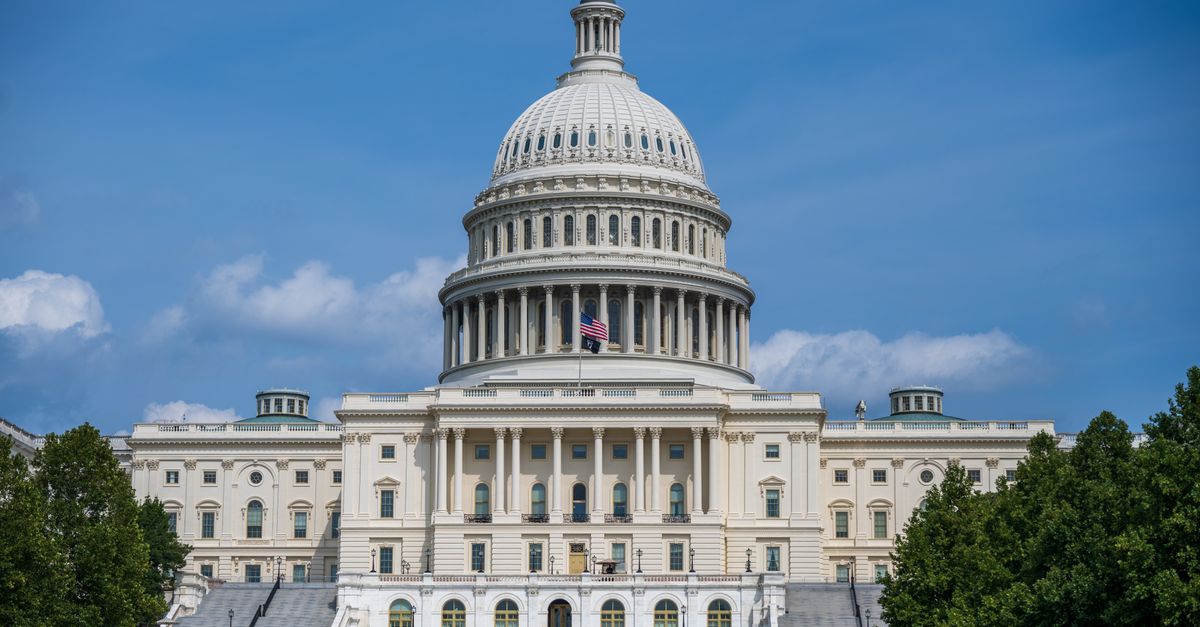
A crypto ethics provision that would have forced senior US officials to divest their digital-asset holdings collapsed along with the rest of the Senate’s CLARITY Act on Sept. 15, 2026 — but not before revealing a gap that lets adult children of officials keep crypto stakes entirely outside federal conflict-of-interest rules. The provision would have required officials and their spouses holding at least $15,000 in equity tied to crypto-issuing or crypto-sponsoring businesses to either divest or place those holdings in a qualified blind trust. It explicitly excluded adult children, meaning family wealth routed through a grown son or daughter would have escaped scrutiny even as the bill aimed to tighten oversight elsewhere.
The episode lands squarely on two of the government’s most visible crypto-adjacent figures: Commerce Secretary Howard Lutnick and President Donald Trump. Lutnick joined Trump’s Cabinet in February 2025 after running Cantor Fitzgerald, the Wall Street firm that serves as reserve custodian and preferred primary dealer for Tether’s USDT-related US stablecoin operations. In May 2025, Cantor announced a plan to transfer ownership of Lutnick’s stake, and SEC filings show that transfer closed in October 2025, moving beneficial ownership into trusts that benefit his adult children, with son Brandon Lutnick installed as controlling trustee. Cantor Fitzgerald continues to hold billions of dollars in Treasuries linked to Tether’s reserves, meaning the firm’s crypto-adjacent business kept running in the family even as Lutnick himself stepped back from day-to-day ownership.
Trump’s own crypto exposure is larger and more direct. According to Reuters’ review of his certified financial disclosure, the president reported $1.4 billion in crypto-related income for 2025. That wealth traces largely to World Liberty Financial and a meme coin, both launched with his sons as founding partners. The White House has said Trump’s children manage his finances independently, a framing that mirrors the exact structure the failed Senate provision would have left untouched: assets held by adult children, rather than a spouse or minor child, fall outside the traditional reach of federal ethics attribution rules.
A Law Written for a Different Era of Wealth
Federal ethics law has long attributed a spouse’s or minor child’s assets to a covered official for conflict-of-interest purposes, on the theory that those holdings are effectively part of the same household. Adult children have historically been treated as financially independent, and therefore outside that net. That distinction made sense when family fortunes were built on real estate or operating businesses passed down over decades. It is far less obviously sound when a Cabinet secretary’s son becomes controlling trustee of a stake in a firm that custodies stablecoin reserves, or when a president’s sons co-found the ventures generating a nine-figure share of his income.
The CLARITY Act’s drafters clearly recognized crypto holdings as a distinct ethics risk worth naming — hence the $15,000 threshold and the blind-trust requirement. But by carving out adult children, the draft left one of the most obvious avenues for concentrating family crypto wealth completely unregulated. Whether that exclusion reflected a deliberate policy judgment, a legislative oversight, or simply the political reality of drafting a bill touching a sitting president’s own family is not something the available facts resolve. What is clear is that the loophole existed in the text lawmakers were debating, and that it tracks precisely onto the two highest-profile examples of officials with crypto-linked family businesses.
What the Bill’s Failure Means Now
Because the CLARITY Act failed to advance, the ethics provision itself is moot for now — there is no new statutory divestment or blind-trust requirement in force. That failure has already pushed crypto rulemaking back toward the SEC and CFTC, which are assembling a rulebook piece by piece in the absence of comprehensive legislation, a shift that has also handed core rulemaking authority to the two agencies rather than Congress. But the ethics question the bill raised does not disappear with the vote. Any future version of comprehensive crypto legislation will have to decide explicitly whether adult children’s holdings should count toward an official’s conflict-of-interest exposure, or whether the current gap will simply persist as crypto wealth becomes more common among political families.
Readers should watch for several concrete developments. One is whether Congress revives a divestment or blind-trust requirement in a future crypto bill, and whether any new draft closes the adult-child exclusion or preserves it. Another is whether Cantor Fitzgerald’s continued role holding Treasuries linked to Tether draws further scrutiny given Brandon Lutnick’s trusteeship. A third is how regulators handle disclosure requirements for officials’ family-linked crypto ventures as the SEC and CFTC continue filling the vacuum left by the stalled bill — a process already reshaping how crypto-adjacent companies operate, as seen in moves like Bastion’s conditional national trust charter approval from the OCC. None of these are questions the failed CLARITY Act answered; they are questions its failure leaves open.
Source: CryptoSlate
This content is for informational purposes only and does not constitute financial or investment advice.


Create a free account to comment and earn rewards.
Create account Log in