
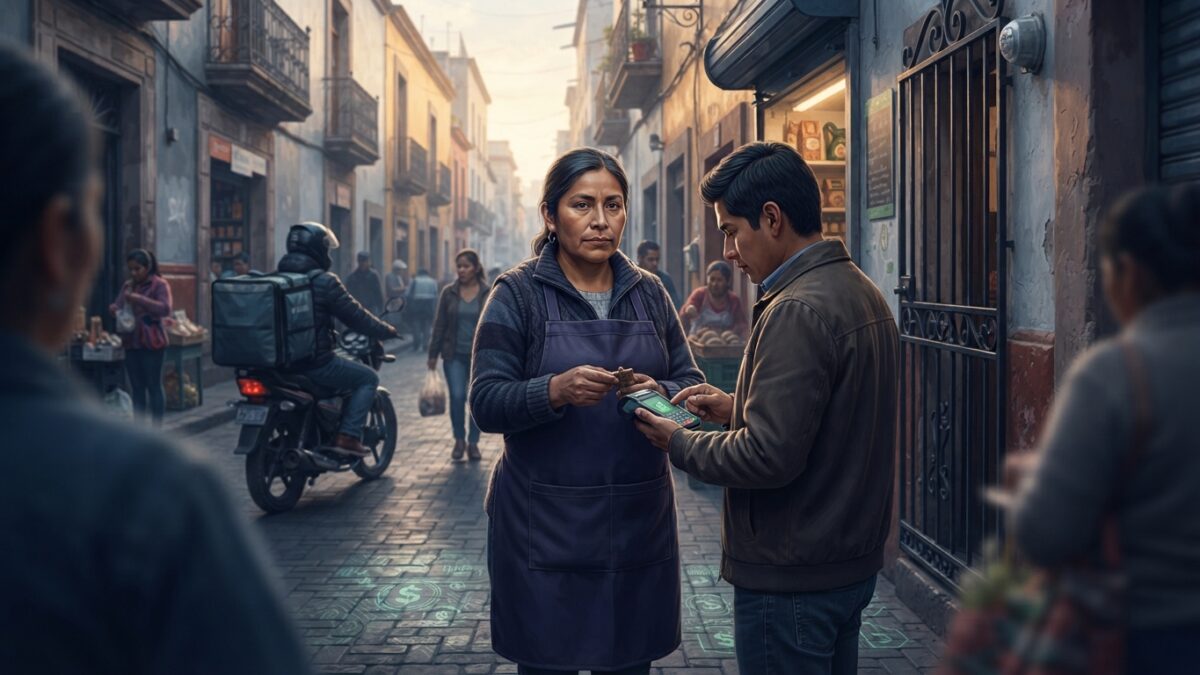
Tether has led a pre-seed funding round in Peso, a Bolivian fintech that lets consumers pay for everyday services with USDT, as the stablecoin issuer deepens its bet on Latin America’s appetite for dollar-pegged digital money. The announcement, made on October 21, 2026, outlines plans for Peso to expand beyond Bolivia into Brazil, Colombia and Argentina, four markets where currency volatility has pushed both businesses and households toward alternatives to local money.
Tether did not disclose the size of the investment. What it did make clear is the strategic intent: back the plumbing that connects stablecoin transactions to the merchant services and banking rails people already use, rather than simply promoting USDT as a standalone asset.
From Food Delivery to Bank Transfers
Peso’s existing footprint gives a concrete sense of what that plumbing looks like. The company has integrated USDT payments into Yango’s food delivery service in Bolivia, meaning a customer can settle a meal order in stablecoins without treating the transaction as a separate crypto event. Peso also offers QR code payments, point-of-sale services for merchants, and virtual accounts that link to Bolivia’s banking system through ACH transfers.
That combination matters because it addresses the gap that usually stalls stablecoin adoption outside trading platforms: the handoff between digital dollars and the banks, card networks and point-of-sale systems that run daily commerce. By wiring USDT directly into a food-delivery checkout flow and into ACH-linked accounts, Peso is positioning stablecoins as a payment method rather than a speculative holding.
The timing is inseparable from Bolivia’s monetary troubles. The country has faced a prolonged US dollar shortage and high inflation since 2025, conditions that pushed many businesses to start accepting USDT simply to keep transacting in a currency that holds its value. Those pressures culminated in June 2026, when Bolivia abandoned its currency peg. The following month, the government began weighing a regulatory framework that would formally recognize USDT for payments, savings and trade alongside the boliviano and the US dollar. That followed an earlier announcement in November 2025, when Bolivia’s government said it intended to integrate cryptocurrencies and stablecoins into the financial system, including letting banks offer digital asset custody.
What the Investment Signals
Tether’s pre-seed check into Peso is a small transaction by dollar terms but a meaningful signal by positioning. It shows the stablecoin issuer moving from being a passive reserve asset that merchants happen to accept into an active investor shaping the companies that build payment experiences around its token. For a region where several governments are simultaneously drafting crypto rules, as similarly seen with the OCC’s recent stablecoin rulemaking in the United States, that kind of ground-level infrastructure investment can shape how regulators eventually treat the asset class — as a payments tool with real commercial use, not merely a trading instrument.
The move also arrives alongside a separate but related development in Bolivia: lending platform Tala partnered with El Dorado, announced the day before the Peso news, to offer USDT-denominated credit on the Tempo blockchain. Taken together, the two announcements suggest Bolivia is becoming a proving ground for stablecoin-based financial services that go beyond payments into credit, savings and merchant settlement — a broader stack than most dollarization-driven crypto adoption stories typically show.
For ordinary users in Bolivia, Brazil, Colombia and Argentina, the practical implication is that stablecoins are being woven into services they already use rather than requiring them to adopt a new financial habit from scratch. That is a meaningfully different adoption path than the one seen in markets where crypto remains confined to exchanges and wallets, and it echoes broader global interest in stablecoin infrastructure, including proposals like the won-backed stablecoin project being discussed in South Korea.
What to Watch Next
Several threads will determine whether this expansion sticks. First, Bolivia’s regulatory process is still in the consideration stage; whether the government finalizes a framework recognizing USDT alongside the boliviano and the dollar will shape how far companies like Peso can scale locally. Second, the promised rollout into Brazil, Colombia and Argentina will test whether the merchant-and-banking integration model built in Bolivia can transfer to markets with different banking infrastructure and currency conditions. Third, the parallel growth of USDT-denominated lending through Tala and El Dorado suggests credit products may follow payments, which is worth tracking as a signal of how deep stablecoin integration goes beyond simple transactions. Finally, as regulators in other jurisdictions debate their own crypto asset rules — a dynamic visible in the ongoing pushback against the SEC’s crypto asset rule — Bolivia’s experiment may become a reference point for how dollar-pegged tokens behave when embedded directly into a national payments system rather than treated as an offshore asset.
Source: Cointelegraph
This content is for informational purposes only and does not constitute financial or investment advice.


Create a free account to comment and earn rewards.
Create account Log in