
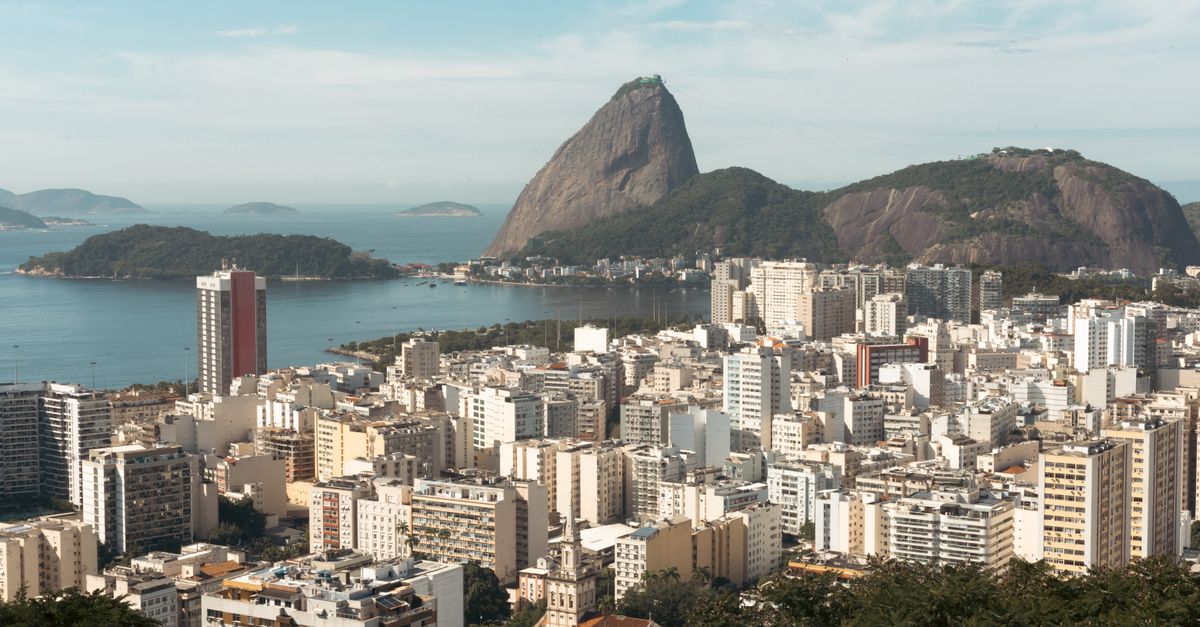
When Luiz Inácio Lula da Silva unexpectedly won Brazil’s presidential runoff on Sunday, the country’s currency and stock market did not just wobble — they collapsed. Brazilian corporations responded within hours by pouring money into dollar-pegged stablecoins and bitcoin, turning a domestic crypto exchange into an improvised corporate treasury shield almost overnight.
On Mercado Bitcoin, one of Brazil’s largest crypto exchanges, corporate accounts made up 78% of all trading on election Sunday, dwarfing the 22% share from retail traders. Turnover in Tether’s USDT jumped nearly 800% week-on-week, more than triple the average of the previous four Sundays, while bitcoin trading on the platform surged 865% compared with the Sunday before. Bitcoin itself was trading around $84,459.46 at the time.
A political shock the market didn’t price in
The scale of the reaction only makes sense against how confident markets had been that Lula would lose. As recently as October 24, prediction platform Kalshi gave Lula’s opponent an 84% chance of victory. Polymarket, which along with Kalshi has been blocked in Brazil since April, had priced the race the same way — a mispricing detailed in a related look at how a trading ban left Polymarket badly wrong on Brazil’s election. The runoff itself was unusual on multiple fronts: it included a last-minute two-hour voting extension approved by Lula’s former defense attorney, and Lula became the first candidate in Brazil’s modern democratic history to win the presidency after finishing second in the first round.
The market’s verdict was swift and brutal. The Ibovespa stock index fell 14% the day after the election, its worst single-day drop since March 2020. The real lost ground against the dollar, which rose more than 8% — the greenback’s largest one-day gain against the Brazilian currency since 1999. The swing was especially jarring because three weeks earlier, after the first round of voting, the opposite had happened: the Ibovespa jumped 7.7% and the dollar fell more than 4% against the real, as markets bet on a different outcome. A fuller account of that reversal is covered in this report on the historic rout that followed Lula’s surprise win.
Underlying the selloff was renewed anxiety over fiscal policy. Lula had campaigned on higher social spending and a ban on online betting, positions that reignited investor concerns about Brazil’s budget trajectory even before a single vote was counted. That backdrop helps explain why the panic was concentrated so heavily in corporate accounts rather than retail ones: companies with real exposure to the real’s value had the most to lose, and the fastest reflexes to act.
What the stablecoin rush reveals
The numbers go well beyond a single exchange. Across ten trading venues tracked by Biscoint, turnover in USDT against the real rose 150% and USDC volume jumped 318% from the prior Sunday. Combined USDT and USDC turnover reached 1.84 billion reais, roughly $350 million, on Monday alone — a 65% weekly increase. Bitcoin volume on those venues rose more than ninefold to 1,336 BTC. On Binance specifically, BTC/real turnover climbed 370% even as global BTC/USDT volume fell 25%, a divergence that points squarely to local, Brazil-specific hedging rather than any broader global crypto rally. Notably, bitcoin gained 9.4% against the real but slipped 0.2% against USDT, underscoring that the move was about escaping the real, not chasing bitcoin gains.
That distinction matters. This was not retail speculation riding a bull run; it was treasury management. Reports indicate corporate clients on Mercado Bitcoin hold up to 15% of their assets on the platform, which suggests stablecoins have already become a standing instrument in some firms’ cash-management toolkits, not an emergency improvisation invented on election night. What changed on Sunday was the intensity of use, not the existence of the tool.
The episode lands at a moment when Brazil’s crypto infrastructure is itself in flux. Binance, for instance, has been adjusting its operations and seeking a local license ahead of an October 30 deadline, as detailed in coverage of Binance’s push for a Brazil license — a reminder that the exchanges absorbing this surge of corporate demand are simultaneously navigating their own regulatory transitions.
What to watch next
Several threads are worth following as this settles. First, whether corporate stablecoin holdings on platforms like Mercado Bitcoin stay elevated or revert once political uncertainty fades will indicate whether this was a one-off panic or a durable shift in treasury practice. Second, regulators in Brasília may scrutinize the scale of corporate crypto flows during the crisis, given how directly they intersected with currency stability. Third, the fate of prediction markets in Brazil remains unresolved, with Kalshi and Polymarket still blocked domestically even as their pricing errors on this election draw renewed attention. Finally, broader fiscal clarity from the incoming Lula administration — on spending plans and the proposed betting ban — will likely determine whether the real stabilizes or whether companies keep treating dollar-pegged tokens as a standing insurance policy.
Source: CoinDesk
This content is for informational purposes only and does not constitute financial or investment advice.

Create a free account to comment and earn rewards.
Create account Log in