

In much of the world, crypto is a speculative bet. In Latin America, it is often a workaround. The region has become one of the fastest-growing crypto markets on the planet — Chainalysis measured 63% growth in on-chain value in the year to June 2025, second only to Asia-Pacific — and the reasons have little to do with getting rich quickly. They have to do with inflation that eats salaries, remittance fees that tax the poorest, and banking systems that never reached everyone. Understanding crypto in Latin America means understanding problems that predate it by decades.
The three forces driving adoption
Strip away country differences and three structural drivers explain most of the region’s crypto activity:
- Inflation and weak currencies. Several Latin American countries have lived through repeated episodes of double- or triple-digit inflation. Where the local currency loses value month after month, holding “digital dollars” — mostly stablecoins — is not speculation; it is defense. For many users, crypto is simply the most accessible dollar account they have ever had.
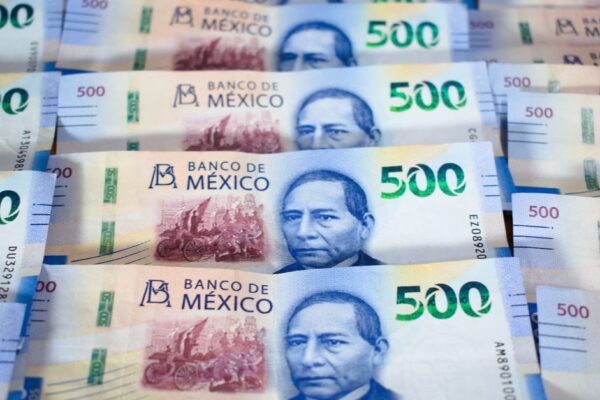
- Remittances. Latin America receives well over $150 billion a year in remittances, with Mexico alone above $60 billion in recent years. Traditional corridors charge meaningful fees and take days; crypto rails move value in minutes at any hour. Total costs still depend on converting to local cash at the destination, but for a growing share of senders the math works.
- Banking exclusion. Large parts of the region’s population remain unbanked or underbanked, while smartphone penetration is high. A wallet app requires no branch, no minimum balance, and no credit history — which turns a phone into basic financial infrastructure.
Brazil: the giant that formalized
Brazil is Latin America’s crypto heavyweight and ranks fifth in the world in the Chainalysis 2025 Global Adoption Index, receiving over $300 billion in on-chain value in a single year — roughly a third of the entire region’s activity. Its story is one of formalization: a 2022 law made the central bank the industry’s regulator, banks and brokers launched crypto products, and the wild success of Pix, the instant payment system, created a population comfortable with digital money. In Brazil, crypto grew not against the financial system but alongside it.
Argentina: adoption born of inflation
Argentina ranks among the top twenty countries globally for adoption, and its usage pattern is unmistakable: stablecoins dominate. After years of high inflation and long stretches of currency controls that restricted legal dollar purchases, buying USDT or USDC became the digital version of a national habit — saving in dollars. Crypto purchases have historically spiked around devaluations and policy shifts. Argentina is the clearest case worldwide of crypto as an inflation hedge adopted from the bottom up, long before regulators arrived.
Mexico: the remittance corridor
Mexico’s crypto story runs through the United States. As one of the world’s largest remittance recipients, the country is a natural testing ground for crypto-based transfers, and a meaningful share of its exchange volume is linked to cross-border flows. Fintech adoption is high and the 2018 Fintech Law recognized virtual assets early, though the central bank later restricted regulated institutions from offering crypto directly — leaving a large market operating in a regulatory gray zone.
Venezuela: crypto under crisis
Venezuela shows what adoption looks like under extreme conditions. Hyperinflation destroyed the bolívar’s savings function years ago, and stablecoins now circulate as an everyday store of value and, increasingly, a means of payment — some merchants price directly in USDT. Crypto also serves the diaspora sending money home around a restricted banking system. It is adoption driven by necessity, with all the risks of informality attached.
El Salvador and the limits of decree
El Salvador became the world’s first country to make bitcoin legal tender in 2021, complete with a state wallet and government bitcoin purchases. The experiment made history but not habits: surveys consistently showed most Salvadorans rarely used bitcoin for payments, and under a 2024 agreement with the IMF the government made merchant acceptance voluntary and scaled back its involvement. The lesson cuts both ways — governments can put crypto on the map by decree, but everyday adoption follows need, not law.
Stablecoins: the region’s quiet protagonist
Across every one of these stories runs the same thread: the assets Latin Americans actually use most are not volatile cryptocurrencies but stablecoins. Chainalysis data shows stablecoins account for the region’s largest share of transaction volume, used for savings, commerce, and transfers. The region’s “crypto adoption” is, to a large degree, digital dollar adoption — a fact that says as much about Latin America’s monetary history as it does about blockchain technology.
The risks that come with the territory
Honest coverage requires the other side of the ledger. High adoption has attracted predators: pyramid schemes and fake “investment platforms” marketed through WhatsApp and social media have caused painful losses across the region, often targeting people seeking protection from inflation. Informal peer-to-peer trading carries counterparty risk. Regulation remains uneven — advanced in Brazil, partial in Argentina and Mexico, minimal elsewhere — so user protections vary enormously by country. And volatility still applies to everything that is not a stablecoin, while stablecoins carry issuer and depeg risks of their own. Adoption driven by necessity does not suspend any of crypto’s dangers; if anything, it raises the stakes, because the people involved can least afford losses.
The bottom line
Latin America matters to crypto because it answers the question skeptics ask most: what is this actually for? Here, the answers are concrete — protecting wages from inflation, moving money across borders without losing days and fees, banking the unbanked through a phone. That does not make crypto a solution to the region’s structural problems, and it does not erase scams, volatility, or regulatory gaps. But it does make Latin America one of the few places where crypto’s promise and its reality can be measured against each other, in daily life, at scale.
This content is for informational purposes only and does not constitute financial or investment advice.

Create a free account to comment and earn rewards.
Create account Log in