
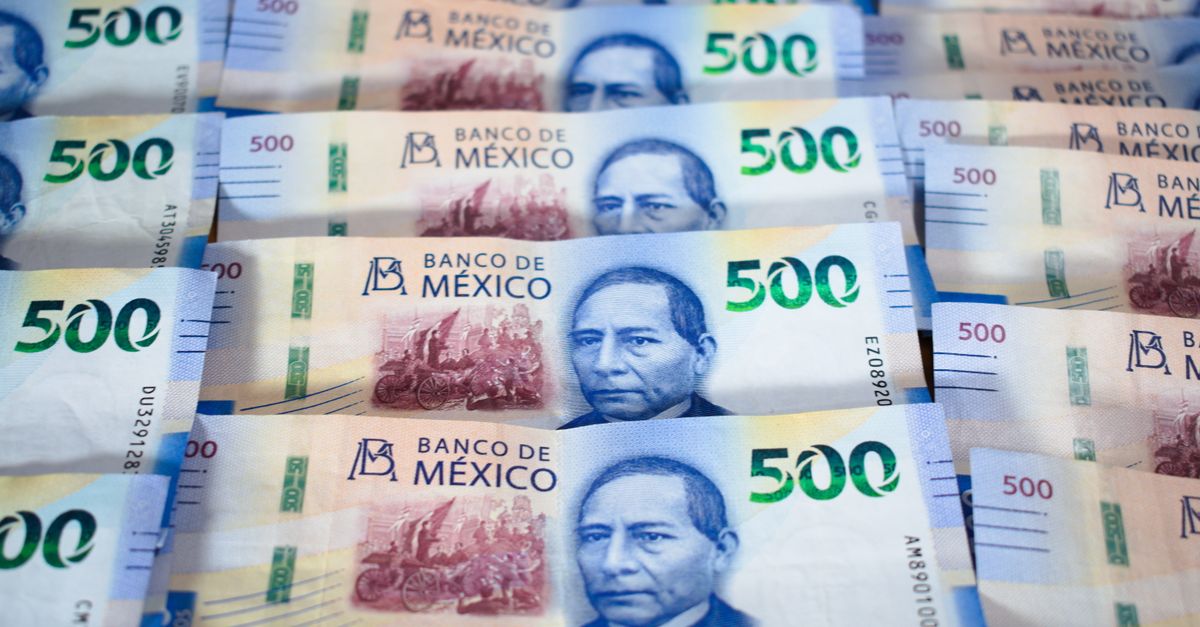
Nearly eight years after Mexico passed a law that could allow regulated peso-pegged digital tokens, Banco de México has authorized none. The silence has a direct consequence: dollar-backed stablecoins USDC and USDT keep dominating the flow of crypto-based remittances between the United States and Mexico, deepening the dollarization of a payment channel that touches millions of households.
The absence of action is notable because the legal door has been open since 2018. Mexico’s Fintech Law was one of the earliest comprehensive frameworks in Latin America to address digital assets, and it included provisions that would let regulators authorize the issuance of stablecoins tied to the peso. As of September 2026, that authorization has not been granted, and commercial banks in Mexico are not lobbying for it either, according to the facts reviewed for this report.
A law with no token to show for it
The Fintech Law was designed to give Mexican regulators tools to keep pace with financial innovation without ceding oversight. Stablecoins, digital tokens meant to hold a steady value by being backed one-to-one with a reserve asset, were part of that anticipated toolkit. In theory, a peso-denominated stablecoin issued under Banxico’s supervision could offer Mexican users a digital dollar-equivalent, but in their own currency, for savings, payments or transfers.
In practice, none exists. Banxico has not moved to approve one, and the pressure that might normally come from the private sector is missing. Commercial banks, which would be the most likely candidates to issue or partner on such a product, are not pushing Banxico for authorization. That leaves a vacuum that dollar-pegged alternatives have filled on their own terms, without needing local regulatory sign-off, since they already circulate globally on public blockchains.
USDT and USDC have become the de facto standard for crypto remittances into Mexico precisely because they sidestep this vacuum. Both tokens are widely available, deeply liquid across exchanges and wallets, and pegged to the US dollar, which gives senders and recipients a predictable store of value during the transfer window. For a Mexican household receiving money from a relative working in the United States, converting dollars into a dollar-pegged token and later into pesos is a well-worn path; converting into a peso-pegged token issued by a Mexican-regulated entity is not an option that currently exists.
What the regulatory gap means for Mexico
The practical effect is that Mexico’s crypto-based remittance corridor runs entirely on dollar rails, even though the final destination of the money, and the currency in which it will be spent, is the peso. This is not a technical inevitability; it is a byproduct of a specific choice, or non-choice, by the country’s central bank. Other jurisdictions have moved in different directions. In the United States, regulators have been actively shaping the rules stablecoin issuers must follow, including the capital and redemption requirements the Federal Reserve has laid out for stablecoin issuers. Washington has also begun treating dollar-pegged tokens as more than a private payment tool, with officials weighing whether dollar stablecoins can serve as an instrument of foreign policy. Mexico’s inaction, by contrast, means it has no comparable lever over the tokens that already dominate its own remittance flows.
This matters because cross-border stablecoin activity is not a marginal phenomenon. Global data has shown cross-border stablecoin flows surging even as broader crypto markets have cooled, underscoring that these tokens have become genuine payment infrastructure rather than a speculative sideshow. When that infrastructure runs on a foreign currency by default, the country receiving the funds has less say over the monetary characteristics of a channel that increasingly serves its own citizens.
What to watch next
Several signals will indicate whether this dynamic is likely to shift. First, whether Banxico issues any public guidance, consultation or timeline on peso-stablecoin authorization under the Fintech Law, something that has not happened as of the facts reviewed here. Second, whether Mexican commercial banks change their posture and begin advocating for a regulated peso token, given that today they are described as not pushing for it. Third, whether Mexico’s approach diverges further from peers already experimenting with bank-led digital-asset infrastructure, such as the tokenized deposit systems recently rolled out by Canada’s largest banks and the interbank tokenized deposit transfers completed by major banks in the United Kingdom. Finally, continued growth in USDT and USDC remittance volumes into Mexico would confirm that, absent regulatory action, the market will keep defaulting to dollar-denominated solutions regardless of what the law technically permits.
Source: CriptoNoticias
This content is for informational purposes only and does not constitute financial or investment advice.



Create a free account to comment and earn rewards.
Create account Log in