
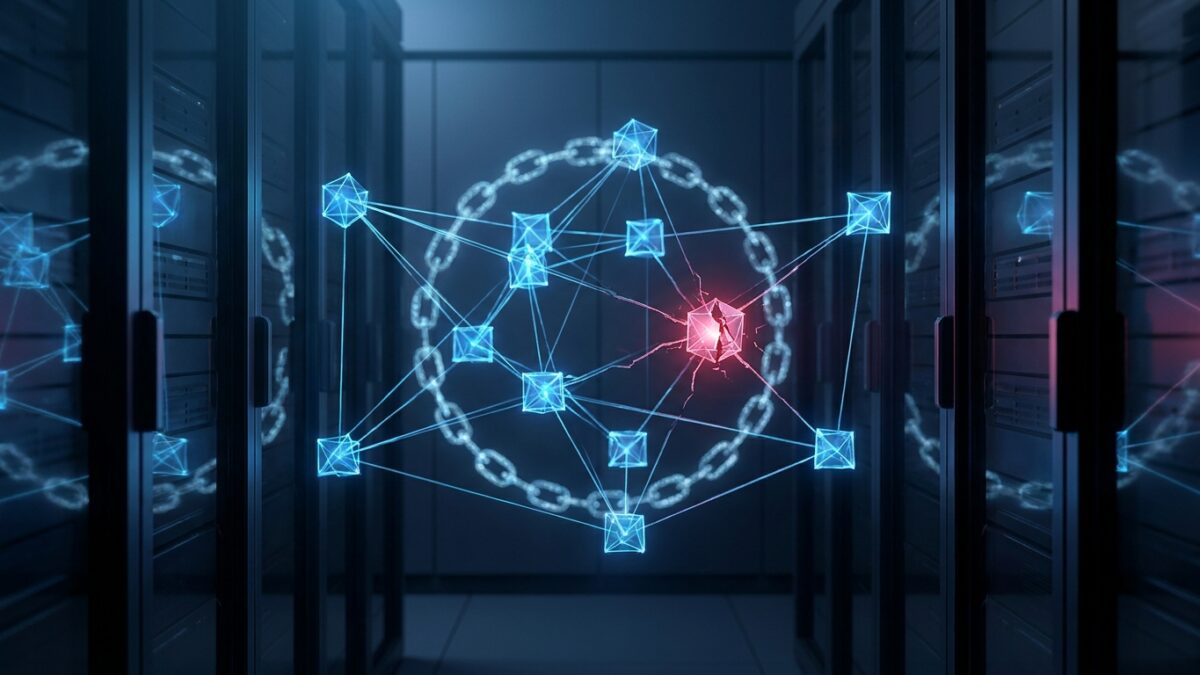
Validators on the Cronos blockchain, the network backed by Crypto.com, halted the chain and rolled back nearly two hours of transaction history to reverse the effects of a $111.2 million DeFi exploit targeting the lending protocol Tectonic. The decision recovered 92% of the affected funds but erased every transaction — legitimate or not — processed during the window, a move that reopens a long-running debate about what “immutable” actually means on a blockchain.
What happened on August 30
According to Cronos’s own post-mortem, published September 8, an attacker manipulated the price of TONIC, Tectonic’s native token, on low-liquidity decentralized exchanges. By artificially inflating TONIC’s value, the attacker created oversized collateral and then borrowed against it across nine separate lending markets on Tectonic, extracting $120.4 million in borrowed assets. A preliminary estimate put the affected value at $75 million, with roughly $6 million bridged off the Cronos network before anyone could react.
Cronos validators halted the network at 9:32 a.m. EST. The chain stayed offline for roughly nine hours, resuming at 6:49 p.m. EST the same day. During the shutdown, validators coordinated a restart using patched software applied to the same transaction record, then repriced open positions once the network came back online. The practical effect was a rollback of 10,961 blocks — one hour and 54 minutes of activity — wiping out the attacker’s transactions along with every other transfer, trade, or transaction processed by ordinary users in that stretch.
Of the funds involved, $9.19 million remains unrecovered because it had already left the Cronos network before the halt took effect, illustrating the limits of a rollback once assets cross a bridge to another chain — a dynamic also visible in the Liquid Network’s own halt after a large Bitcoin withdrawal earlier this month.
What it means for DeFi’s finality problem
The core tension here is not whether Cronos stopped an exploit — it’s how it stopped it. Blockchains are generally marketed on the premise that once a transaction is confirmed, it is final and cannot be undone by any central authority. A validator-coordinated rollback that erases confirmed blocks, including transactions unrelated to the exploit, tests that premise directly. Cronos has effectively demonstrated that when enough validators agree, transaction history can be rewritten after the fact.
Cronos itself acknowledged shortcomings in how it handled the episode, saying communication during the nine-hour shutdown was poor, leaving users without clear information about what was happening or when service would resume. The team also noted that reversed transactions are now verifiable only through archived records rather than the public block explorers that users would normally rely on to check network history — a workaround that raises its own transparency questions, since ordinary users cannot easily audit what was changed without going through non-standard channels.
This is not an isolated case. Maya Protocol took a similar path after a $1.65 million exploit in August, halting its network to contain losses. Ravencoin faced a comparable decision after an exploit put roughly three days of transactions at risk, effectively forcing a rebuild of its chain history. Taken together, these incidents suggest that when exploits are large enough or fast-moving enough, coordinated intervention by validators or core teams is becoming a de facto emergency tool across multiple blockchain ecosystems — even on chains that market themselves as decentralized and censorship-resistant.
For lending protocols specifically, the Tectonic exploit is also a reminder that price oracles drawing from thin, low-liquidity markets remain a soft spot. An attacker who can move the price of a token on a handful of small exchanges can, in effect, manufacture collateral out of nothing and borrow against it — a mechanic distinct from custody failures like the one that recently sank the exchange Orionx after a $7 million custody breach, but no less damaging to user trust in the protocols involved.
What to watch next
Several open threads will determine how this episode is ultimately judged:
- Whether Cronos or Tectonic can recover any portion of the remaining $9.19 million that left the network before the halt.
- How Cronos improves its communication protocols for future emergencies, given its own admission that the rollout of information during the nine-hour outage fell short.
- Whether users and developers push for better public tooling to verify rolled-back transactions, rather than relying on archived records outside standard block explorers.
- Whether other DeFi protocols tighten oracle design and liquidity requirements to prevent similar collateral-inflation attacks, a category of exploit distinct from wallet-level vulnerabilities such as the Coldcard wallet exploit that rattled Bitcoin holders earlier this year.
- Whether the Cronos precedent influences how other chains respond to future large-scale exploits, given the now-established pattern set by Maya Protocol and Ravencoin.
The Tectonic exploit was contained faster and more completely than many DeFi hacks of similar size. But the method — a coordinated rewrite of confirmed blockchain history — leaves an unresolved question for anyone using Cronos or similar networks: if validators can undo an attacker’s transactions today, what governs when, and how, they might undo someone else’s tomorrow?
Source: Decrypt
This content is for informational purposes only and does not constitute financial or investment advice.



Create a free account to comment and earn rewards.
Create account Log in