
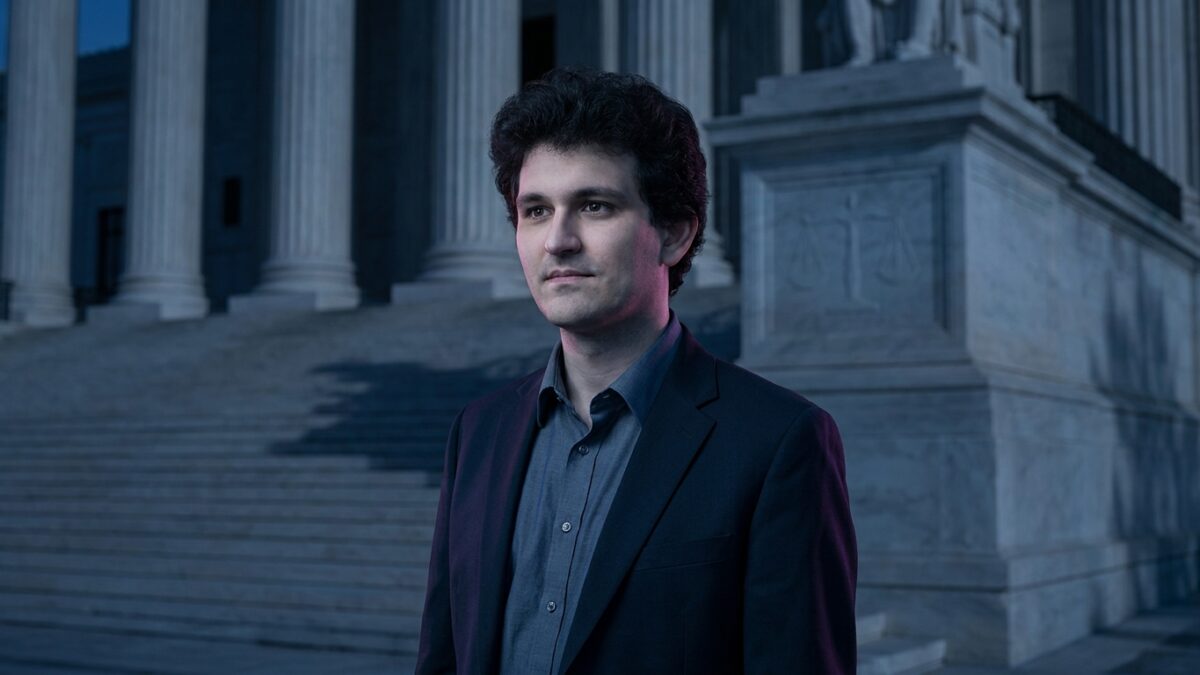
Sam Bankman-Fried, the co-founder and former chief executive of FTX, has petitioned the U.S. Supreme Court to overturn his 2023 fraud conviction and the accompanying $11 billion forfeiture order. The petition, filed as reported on September 11, 2026, argues that courts wrongly blocked him from presenting evidence that FTX and its trading affiliate Alameda Research held sufficient assets to repay customers and investors, and that the forfeiture amount violates the Eighth Amendment’s prohibition on excessive fines.
The filing marks the latest and likely final stage of Bankman-Fried’s legal fight following a jury’s decision to convict him on seven counts, including wire fraud, conspiracy, and money laundering. He is currently serving a 25-year prison sentence. In June, a three-judge panel of the Second Circuit Court of Appeals affirmed the conviction, closing off one avenue of appeal and setting up this petition to the nation’s highest court.
A Legal Theory Tested by a Recent Precedent
Central to Bankman-Fried’s appeal is the so-called “no-loss” defense: the argument that because FTX customers have since been repaid with interest through bankruptcy proceedings, the fraud caused no lasting financial harm, undermining the basis for both the conviction and the size of the forfeiture. The Second Circuit rejected that argument, leaning on the Supreme Court’s own 2025 ruling in Kousisis v. United States, which held that wire fraud statutes do not require prosecutors to prove intent to cause net economic harm. Under that precedent, a fraudulent scheme can be criminal even if victims are ultimately made whole.
That ruling narrows the path for Bankman-Fried’s petition, but it does not close it. His lawyers appear to be making two separate arguments: first, that he should have been allowed to introduce evidence about the solvency of FTX and Alameda at trial, regardless of how the fraud statute is ultimately interpreted; and second, that even if the conviction stands, an $11 billion forfeiture order is constitutionally excessive given that customers have since recovered their funds. These are distinct legal questions, and the Supreme Court could, in theory, decline to revisit the fraud theory itself while still taking interest in the forfeiture issue.
What the Case Could Mean Beyond Bankman-Fried
The stakes extend past one defendant. If the Supreme Court agrees to hear the case, it would be weighing in on how much latitude defendants have to argue that victims were not truly harmed — a question relevant to a wide range of financial fraud prosecutions, not just crypto-related ones. A ruling on the excessive-fines argument could also shape how aggressively prosecutors and courts calculate forfeiture amounts in cases where restitution has occurred through separate proceedings, such as bankruptcy.
For the broader digital-asset industry, the case is a reminder that the legal reckoning from the 2022 FTX collapse is not fully over, even as the sector has moved into a period of institutional courtship and product expansion. Exchanges and custodians are now negotiating with traditional finance players, as seen in Nasdaq’s $100 million investment in Kraken’s parent company, while banks in markets like Brazil are expanding crypto offerings while keeping assets off their balance sheets. Against that backdrop of growing institutional integration, the FTX prosecution remains a touchstone for how far criminal liability extends when customer funds are misused, even if those funds are eventually recovered.
It’s also worth noting the timing relative to ongoing U.S. legislative efforts. Congress continues to debate the scope of crypto market structure rules, with the Senate set to vote on opening debate on a crypto bill whose key disputes remain unresolved. A Supreme Court decision on Bankman-Fried’s petition — whichever way it goes — will not directly alter that legislative process, but it will sit alongside it as part of the broader legal and regulatory record shaping how the industry is treated by U.S. institutions.
What to Watch Next
The Supreme Court is expected to decide later in 2026 whether to take up the case at all. Most petitions of this kind are denied without comment, and there is no guarantee the justices will choose to hear arguments on either the trial evidence issue or the forfeiture question.
- Whether the Court grants certiorari, and on which specific questions it agrees to hear
- Any indication of how the Kousisis precedent might be applied or distinguished in the forfeiture context
- Statements from FTX bankruptcy administrators regarding customer repayment status, which Bankman-Fried’s team is citing as evidence against the forfeiture amount
- Whether the case draws amicus briefs from legal scholars or industry groups given its potential implications for fraud prosecutions generally
Whatever the outcome, the petition underscores that the legal aftermath of FTX’s collapse continues to generate questions with implications well beyond the crypto industry itself, touching on fundamental doctrines of fraud law and constitutional limits on financial penalties.
Source: The Block
This content is for informational purposes only and does not constitute financial or investment advice.


Create a free account to comment and earn rewards.
Create account Log in