
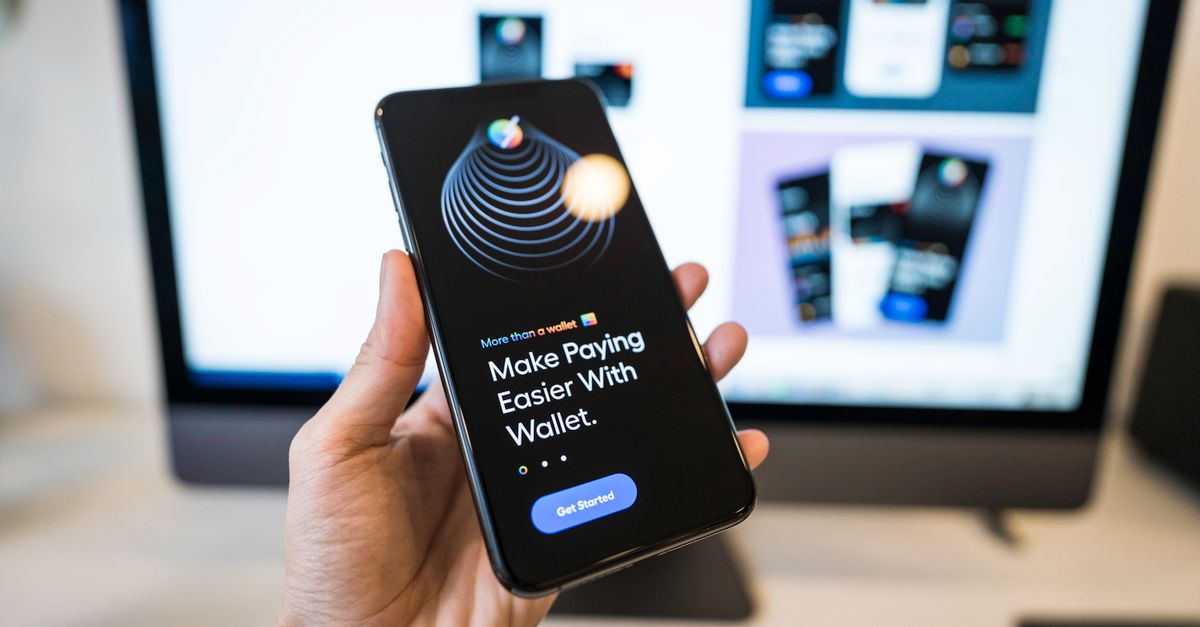
World, the identity and financial technology venture co-founded by Sam Altman and Alex Blania through Tools for Humanity, began rolling out World Money on Thursday, September 17, 2026. The self-custodial app bundles stablecoin payments, digital asset rewards and trading into a single product, while spinning off identity verification into a separate World ID App. The rollout covers more than 150 countries, with Apple Pay funding available through a partnership with Stripe starting in the United States.
The move marks a structural rethink of a product that, until now, had tried to do everything at once. It also lands at a moment when regulators and payment giants are moving faster to accommodate crypto-native infrastructure, from the CFTC’s recent decision to let crypto wallets skip broker registration for derivatives access to the SEC’s steps toward onchain trading of real U.S. stocks. World Money’s launch fits a broader pattern of financial and identity functions migrating onto blockchain rails with mainstream payment partners attached.
From a Single App to Two
World App launched in May 2023 as a combined package: proof-of-personhood verification through iris-scanning hardware, a crypto wallet, and token trading, all under one roof. The product evolved over time. In October 2024, World App 3.0 introduced Mini Apps and a Vault feature for earning yield on holdings. By late 2025, World began piloting virtual bank accounts that converted user deposits into USDC, expanding that pilot into a wider rollout in December 2025.
World Money represents the next step in that evolution — not by adding more features to a single app, but by dividing the product in two. Identity verification now lives in its own World ID App, while payments, rewards and trading move into World Money. According to World, existing World App and World ID App users can access the new app using their current accounts, meaning the split is designed to be a reorganization of existing functionality rather than a fresh onboarding hurdle.
World Money also carries over Mini Apps built by outside developers, including integrations with prediction market Kalshi, a credit product called Credit, and the lending protocol Morpho. That lineup signals World’s ambition to position the app as a gateway into a wider ecosystem of onchain financial services rather than a closed wallet.
Why Separating Identity From Money Matters
The decision to decouple identity from finance addresses a structural tension that has followed World since its 2023 debut. Bundling a biometric identity system with a crypto wallet and trading tools raised questions about how much financial data should sit alongside sensitive personal verification credentials. By separating the two, World can market World ID as a standalone proof-of-personhood tool — useful for anything requiring human verification, not just its own financial products — while World Money can pursue payments and asset management on its own terms, including partnerships that require dedicated compliance and infrastructure work.
The Stripe-powered Apple Pay funding option is a concrete example of that infrastructure work. It gives U.S. users a familiar on-ramp — funding a self-custodial app directly from Apple Pay — that lowers the friction typically associated with acquiring crypto or stablecoins for the first time. Pairing a mainstream payment rail with a self-custodial architecture is notable: users retain control of their assets while still tapping into conventional consumer payment habits.
This kind of infrastructure bridging is becoming more common across the industry. Traditional financial infrastructure providers are increasingly absorbing crypto-native capabilities, as seen in S&P Global’s acquisition of stablecoin code auditor OpenZeppelin. World Money’s integration with Stripe follows a similar logic: established payment and financial institutions are becoming the connective tissue between conventional users and self-custodial products.
What to Watch Next
Several open questions will shape how World Money is judged in the months ahead. First is geographic execution: a rollout spanning more than 150 countries will inevitably run into uneven regulatory treatment of stablecoins and self-custodial wallets. Not every jurisdiction treats stablecoin-based payment rails the same way — Brazil, for instance, recently moved to bar stablecoins from a key leg of cross-border FX settlement, illustrating that global rollout ambitions can collide with local rules.
Second, the success of the identity-finance split will depend on whether World ID App gains traction as a standalone verification layer used beyond World’s own ecosystem, or whether it remains tightly coupled to World Money in practice. Third, the performance and adoption of the Mini Apps — Kalshi, Credit and Morpho — will indicate whether World Money becomes a genuine platform for third-party financial services or stays primarily a payments and trading tool built by Tools for Humanity itself.
Finally, the underlying technical infrastructure supporting these products deserves scrutiny as networks evolve. Ethereum, which underpins much of the stablecoin and DeFi tooling referenced in Mini Apps like Morpho, is preparing for its Glamsterdam upgrade testing in October, with developers already flagging risks around fake-builder behavior in the network’s block-building process, as detailed in recent test coverage of the upgrade. Any disruption to core settlement layers could have knock-on effects for apps like World Money that depend on them.
Source: Cointelegraph
This content is for informational purposes only and does not constitute financial or investment advice.



Create a free account to comment and earn rewards.
Create account Log in