
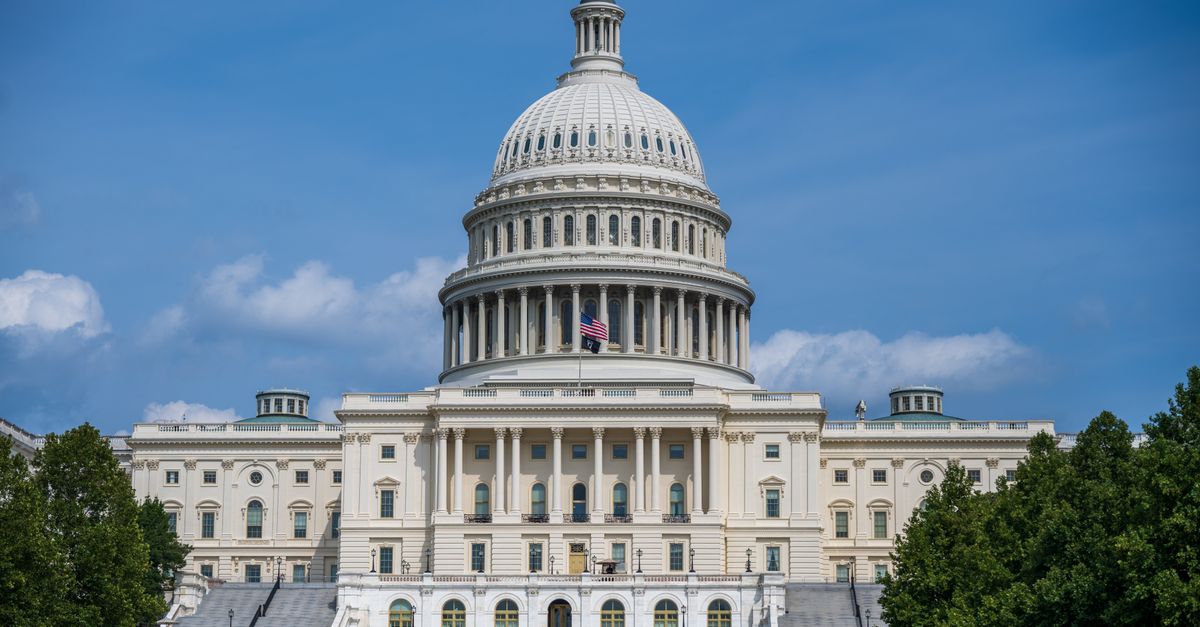
The U.S. Senate failed to advance the Clarity Act last week, falling short in a 49-50 cloture vote and leaving federal crypto market structure rules in the hands of the Securities and Exchange Commission and the Commodity Futures Trading Commission rather than Congress. Industry lawyers and analysts say the outcome quietly benefits two groups that had the most to lose from clear federal legislation: traditional banks and offshore crypto hubs such as the United Arab Emirates.
The Clarity Act was meant to be the long-awaited federal framework dividing oversight of digital assets between the SEC and CFTC, replacing years of piecemeal enforcement with statutory rules that companies could actually build around. Its collapse in the Senate means that vacuum persists. CoinDesk’s Jesse Hamilton, who covers policy for the outlet, described the bill as effectively dead for now, a characterization that reflects how thin the path forward looks after a one-vote defeat on a procedural motion.
Why the Bill Stalled
The fight behind the vote centered on two contentious threads. One was whether stablecoin platforms should be allowed to offer reward programs that function like interest payments, a feature that would put them in direct competition with bank deposit accounts. Banks have consistently lobbied against provisions that would let stablecoin issuers pay yield-like rewards, since it threatens a core piece of their deposit-funding business model. The second thread involved ethics questions tied to government officials, including scrutiny that emerged around a loophole affecting officials’ adult children, an issue that had already drawn attention before the vote and complicated efforts to build consensus.
Those two fault lines were reportedly enough to sink cloture, even though the bill had moved further through the legislative process than prior crypto market structure efforts. Without 60 votes to end debate, the measure cannot proceed to a floor vote in its current form, and lawmakers have not indicated an imminent path to revive it.
Regulators Fill the Gap
With Congress sidelined, the SEC and CFTC are moving on their own timelines. Just after the vote, the SEC issued a temporary conditional exemption permitting eligible trading venues to offer tokenized U.S. stocks through permissioned liquidity pools built on public blockchains. It is a narrow, conditional step rather than a comprehensive rule, but it signals the SEC’s willingness to use exemptive authority to keep tokenization projects moving even absent new legislation. The CFTC, meanwhile, has submitted its own crypto rules proposal to the White House for review; the substance of that proposal has not been disclosed publicly.
This pattern — agencies advancing narrow, conditional, and sometimes overlapping rules while Congress stays gridlocked — is not new, but the Clarity Act’s failure cements it as the default mode of U.S. crypto regulation for the foreseeable future. As detailed in earlier coverage of the vote’s aftermath, the defeat effectively hands crypto rulemaking to the SEC and CFTC, agencies that must now interpret and stretch existing statutes written before most current crypto products existed. That improvisational approach, as some observers have noted, means the rulebook is being assembled piece by piece rather than as a coherent framework.
What This Means for the Industry
For companies building crypto products in the U.S., the practical effect is prolonged uncertainty. Without a statute defining which tokens are securities, which are commodities, and how stablecoins should be treated, firms must navigate an evolving mix of SEC exemptions, CFTC guidance, and enforcement actions — a costlier and less predictable environment than a settled legal framework would provide.
That uncertainty has a geographic consequence. The UAE, and Dubai in particular, has spent years building a licensing regime specifically for virtual-asset businesses. More than 110 regulated virtual-asset businesses already operate there, with roughly 20 more holding in-principle approvals awaiting final licensing. Lawyers such as Irina Heaver, Anton Golub, and Kyle Bligen, who work with crypto firms navigating UAE rules, point to this contrast as evidence that regulatory clarity — even from a smaller jurisdiction — can attract capital and talent that a larger but gridlocked market cannot retain.
Banks, for their part, have less incentive to see a compromise emerge quickly. A federal framework that legitimized stablecoin rewards would introduce a new competitor for retail deposits at a moment when banks are already navigating tighter margins. The absence of legislation preserves the status quo they favor, at least in the near term.
What to Watch Next
- Whether the CFTC’s undisclosed proposal, now under White House review, becomes public and how it interacts with the SEC’s existing exemptive relief.
- Whether the SEC extends or expands its conditional exemption for tokenized stock trading beyond the initial eligible venues.
- Any renewed legislative effort in Congress, and whether the ethics and stablecoin-rewards disputes that sank this vote can be resolved in a future draft.
- Continued growth in licensed virtual-asset businesses in the UAE and other jurisdictions positioning themselves as alternatives to U.S.-based crypto operations.
For now, market participants tracking related asset moves have noted that trading activity has largely absorbed the news, with some crypto-linked stocks and tokens rebounding even as the legislative outlook stalls, a pattern visible in crypto stocks snapping back after regulators moved to sidestep the stalled bill.
Source: CoinDesk
This content is for informational purposes only and does not constitute financial or investment advice.


Create a free account to comment and earn rewards.
Create account Log in