
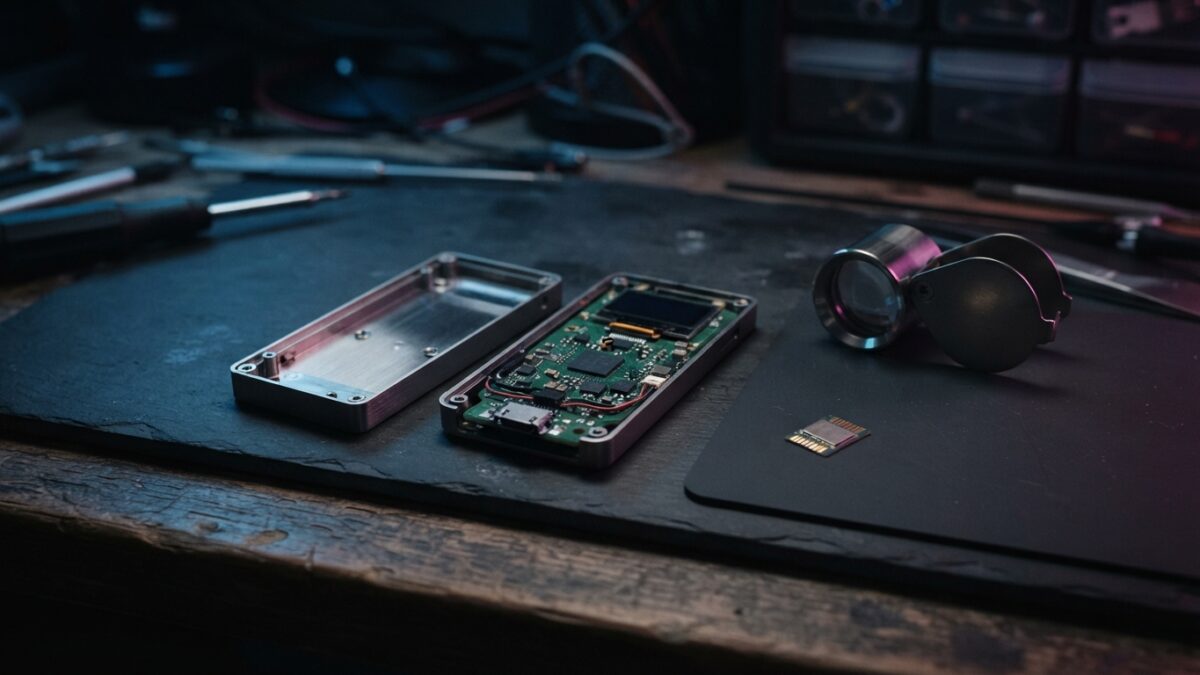
Ledger has confirmed that hardware wallets sold through a Southeast Asian reseller contained an unauthorized hardware implant, a supply-chain breach that an outside investigator says may be linked to as much as $86 million in losses across Bitcoin, Ethereum and Tron. The confirmation, posted Saturday, October 10, 2026, turns what had been a warning into a verified security incident touching one of the crypto industry’s most trusted hardware brands.
The affected devices moved through CryptoBilis, a reseller that Ledger had authorized to sell its products in Indonesia, Malaysia and the Philippines. According to Ledger, the implant was planted at the reseller level rather than inside the company’s own manufacturing or distribution systems. CryptoBilis has since halted all hardware wallet sales while the investigation continues, and Ledger says it is contacting customers believed to have purchased compromised units.
Why a Hardware Wallet Breach Is Different
Hardware wallets exist specifically to keep private keys off internet-connected devices, reducing exposure to malware, phishing and remote exploits. Users buy them precisely because the device itself is supposed to be the trust anchor: generate a seed phrase, sign transactions offline, and never expose the keys to a compromised computer or browser extension. A tampered device undermines that entire premise before a user even powers it on for the first time.
That is what separates this incident from the more familiar categories of crypto theft, such as exchange hacks or smart-contract exploits. Specter, the investigator who surfaced the scale of potential losses, pointed to an attack that happened earlier in the supply chain, meaning the compromise could have been embedded before the wallet ever reached a retail shelf or online storefront in Jakarta, Kuala Lumpur or Manila. For an industry that has spent years urging users toward self-custody as the antidote to centralized failures, a manipulated hardware wallet is a particularly uncomfortable scenario.
The episode follows a pattern seen elsewhere in crypto this year, where trust failures are increasingly traced not to the core protocols themselves but to the intermediaries around them — resellers, custodians, bridges and infrastructure providers. Just as a recent case involving EQIBank and Tether highlighted how exposure can run through third-party relationships, the Ledger incident shows that even the most security-conscious product category is only as strong as its weakest distribution link.
What Ledger Is and Isn’t Saying
Ledger has been careful to draw a boundary around the breach. The company states that its own infrastructure, internal systems and services were not compromised, and that the problem appears isolated to devices that passed through the single reseller, CryptoBilis. Ledger has not disclosed the exact number of affected customers, nor has it independently confirmed the $86 million loss estimate attributed to Specter. That figure remains an outside assessment rather than a company-verified total, a distinction worth keeping in mind as the story develops.
For now, Ledger’s guidance to potentially affected users is direct: anyone who purchased a device through the implicated channel and has not yet completed setup should not do so. Anyone who already set up and used such a device should treat it as compromised, meaning funds should be moved to a new Ledger device using a freshly generated seed phrase rather than importing the old one. Continuing to use a potentially tampered device, or reusing a seed phrase that may have been exposed, would defeat the purpose of the migration.
What This Means for Self-Custody Users
The incident does not indicate a flaw in Ledger’s underlying security architecture or firmware, based on what the company has disclosed. It does, however, reinforce a point that gets less attention than exchange risk or custody debates: where and how a hardware wallet is purchased matters as much as the device’s internal design. Authorized reseller status, in this case, did not prevent tampering from occurring somewhere between manufacture and purchase.
Investors who have built strategies around self-custody as a way to sidestep centralized counterparty risk — the kind of thinking visible in moves like Kraken parent Payward’s push to build out financial infrastructure — now have a reminder that self-custody shifts risk rather than eliminating it. The risk moves from a custodian’s balance sheet to the integrity of a supply chain the end user cannot directly inspect.
What to Watch
- Whether Ledger or independent investigators publish a confirmed count of affected customers and a verified loss total, as opposed to Specter’s current $86 million estimate.
- Results of the CryptoBilis investigation and whether Ledger revokes or restructures its authorized reseller status in Indonesia, Malaysia and the Philippines.
- Whether other authorized resellers in the region or elsewhere face similar scrutiny, given that supply-chain attacks rarely stay confined to a single distribution point.
- Any formal response from regulators in the three affected countries regarding reseller vetting standards for hardware wallet sales.
Source: Cointelegraph
This content is for informational purposes only and does not constitute financial or investment advice.


Create a free account to comment and earn rewards.
Create account Log in