
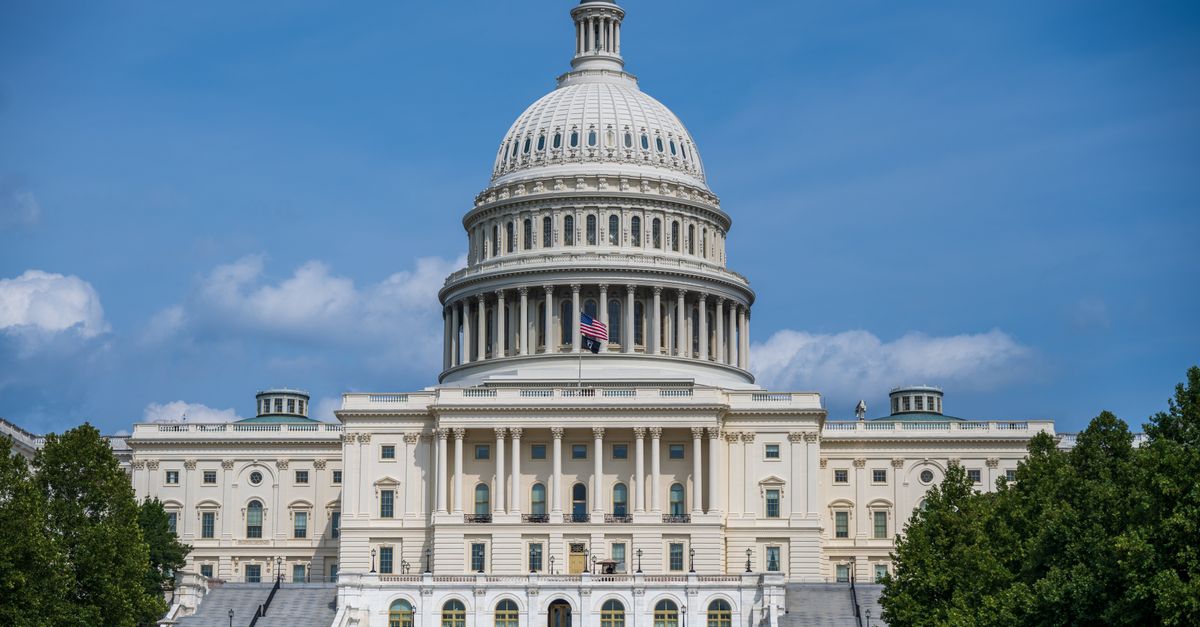
The U.S. Senate on Tuesday failed to advance the Clarity Act, the most ambitious attempt yet to write federal rules for crypto market structure, after a cloture vote fell short of the 60 votes needed. Democrats withheld support over unresolved conflict-of-interest questions tied to President Donald Trump’s crypto holdings, freezing a bill that had been years in the making and pushing any resolution past the November midterms.
The procedural defeat means the Senate cannot yet move to a final vote on the legislation, which was designed to divide oversight of digital assets between the Securities and Exchange Commission and the Commodity Futures Trading Commission and to settle long-running disputes over how tokens, exchanges and stablecoins should be regulated. Instead, the bill is now stalled indefinitely, and with it the industry’s hope for a single, comprehensive rulebook before Congress turns its attention to campaign season.
A Year of Haggling Ends in Stalemate
The Clarity Act has been fought over for more than a year by banks and crypto firms, particularly over how stablecoins should be treated and how to close gaps that critics say leave room for illicit finance. Sen. Cynthia Lummis, R-Wyo., had championed the bill as the vehicle to finally give the industry legal certainty, and Republicans went into this week with revised ethics language they hoped would peel off enough Democratic votes.
That revised text, detailed in earlier reporting on the Senate Republicans’ rewrite of the bill ahead of the cloture vote, would have let state attorneys general sue over enforcement failures and required divestment of what the bill called a “significant financial interest.” But that language stopped short of what Democrats wanted. Sens. Mark Warner, Kirsten Gillibrand, Catherine Cortez Masto, Angela Alsobrooks and Cory Booker were among those who voted no, arguing the ethics provisions still left too much room for the president to benefit financially from crypto policy he has influence over.
On Monday, Democrats floated a counteroffer that would have extended conflict-of-interest restrictions to Trump’s children and required mandatory sale of relevant holdings rather than allowing them to be placed in a blind trust. Lummis rejected that proposal, and the two sides never closed the gap before Tuesday’s vote. That breakdown had been foreshadowed in accounts of a rewritten bill facing a revolt just hours before the vote and in reporting that the bill’s odds sank once Democrats rejected the GOP’s framing of a final offer.
Why Trump’s Crypto Holdings Are the Sticking Point
At the center of the impasse is the scale of Trump’s personal exposure to the crypto market. His holdings, tied to World Liberty Financial and the TRUMP memecoin, have been described as worth hundreds of millions of dollars. For Democrats, that figure transforms an abstract ethics debate into a concrete question: should the president of the United States have a direct financial stake in an industry his own administration is simultaneously trying to regulate through legislation he could sign into law?
Republicans have countered that the revised bill’s divestment and enforcement provisions, including the ability of state attorneys general to bring suits, are sufficient safeguards. Democrats disagree, and the standoff reflects a broader trust deficit that has shadowed crypto policy since Trump’s own financial ties to the sector became public. It also echoes concerns raised separately by state officials; a coalition of attorneys general had already urged the Senate to reject the bill outright, as reported ahead of the vote.
What the Stalemate Means for Regulation
The immediate consequence is a vacuum. Without the Clarity Act, there is still no comprehensive federal statute spelling out which digital assets fall under SEC jurisdiction, which fall under the CFTC, and how stablecoins should be supervised. That leaves the existing patchwork of enforcement actions, no-action letters and agency guidance as the operative rulebook for now.
SEC Chair Paul Atkins signaled that regulators are not waiting on Congress. Speaking at a Solana Policy Institute event on Monday, Atkins said the SEC and CFTC intend to proceed with their own rulemaking regardless of the bill’s fate. That suggests the agencies may try to fill gaps administratively even as the legislative path remains blocked, though rulemaking of that kind typically takes longer and carries less permanence than a statute passed by Congress.
What Comes Next
With the Senate unable to reach 60 votes, attention now shifts to whether negotiators can bridge the gap between Lummis’s position and the Democrats’ demand for mandatory divestment covering Trump’s family. Any House vote on companion legislation is now expected to slip until after the November midterms, according to the reporting, meaning the bill’s fate will be tied to the outcome of that election. Observers will also be watching how far the SEC and CFTC go in advancing rules on their own, and whether state attorneys general take further action on the ethics questions that helped sink this week’s vote.
Source: The Block
This content is for informational purposes only and does not constitute financial or investment advice.


Create a free account to comment and earn rewards.
Create account Log in