
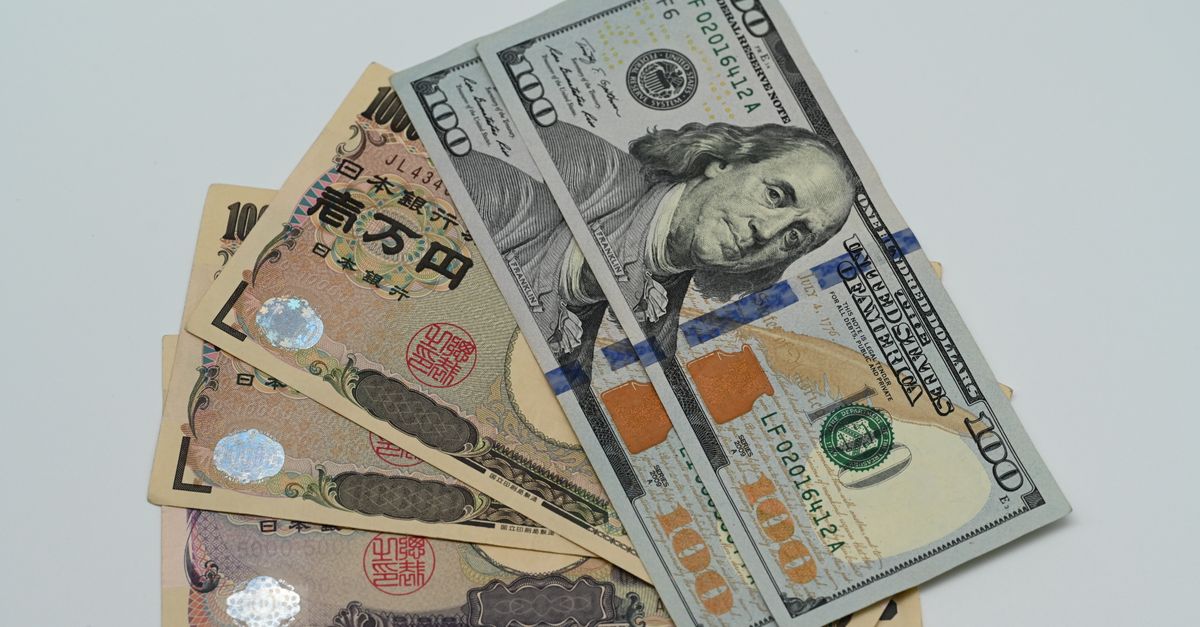
The United States and Japan intervened jointly in currency markets on Friday, July 31, 2026, to arrest a sharp slide in the yen, U.S. Treasury Secretary Scott Bessent confirmed Sunday. The move has reawakened trader anxiety about a repeat of the August 2024 yen carry-trade unwind that briefly wiped out roughly a fifth of bitcoin’s value in a single week — even as fresh market data suggest the old playbook may no longer apply.
The intervention came after the dollar-yen exchange rate climbed to nearly 164, its weakest level for the yen since 1986. By Monday, the pair had rebounded to 156.5, a sign the coordinated action had at least temporarily achieved its goal of steadying the currency. Bank of Japan Governor Kazuo Ueda’s central bank held its policy rate at 1% in its most recent decision, opting against the kind of surprise tightening that rattled global markets two years ago.
Why the 2024 Playbook Still Haunts Traders
To understand the nervousness, it helps to revisit what happened in August 2024. Japan’s ultra-low interest rates had for years made the yen a favored funding currency for a global trade: investors borrowed cheaply in yen and plowed the proceeds into higher-yielding assets elsewhere, including crypto. When the BOJ unexpectedly raised rates to 0.25% that August, the yen strengthened abruptly, forcing leveraged traders to unwind those borrowed positions in a hurry. Bitcoin, caught in the crossfire of that deleveraging, fell from about $62,000 to $49,000 in roughly a week — a drawdown of nearly 20%.
That episode left a durable scar on market psychology. Any sign of yen volatility or aggressive BOJ policy action now triggers reflexive comparisons to the 2024 unwind, regardless of whether the underlying mechanics are actually in play. The latest intervention, following the yen’s tumble to a nearly four-decade low against the dollar, was almost guaranteed to revive those memories.
Bessent’s own comments reinforced the sense that this is not a one-off. He said the U.S. supports Japan’s efforts to correct what Washington views as yen undervaluation and indicated the U.S. would join further joint intervention if conditions warranted it. Ueda, for his part, has pointed to AI-driven demand and yen weakness as inflationary forces pushing prices above the BOJ’s 2% target — a dynamic that keeps the door open to future policy tightening, even if it did not materialize this time.
What the Correlation Data Actually Shows
Here is where the current episode diverges from the 2024 narrative. New analysis cited by CoinDesk found that bitcoin’s 52-week rolling correlation with the dollar-yen exchange rate has reached -0.90 — an unusually strong inverse relationship. But the same analysis argues that bitcoin’s recent price behavior appears to be tracking broad dollar strength or weakness generally, rather than the specific mechanics of yen-funded carry trades unwinding.
That distinction matters. A high statistical correlation between bitcoin and USD/JPY does not by itself prove that leveraged carry-trade positions are driving crypto prices. It could simply reflect that both bitcoin and the yen are separately reacting to the same macro forces — dollar liquidity conditions, U.S. rate expectations, or global risk appetite — without one causing the other. Notably, bitcoin has stayed relatively flat above $63,000 through this latest bout of yen volatility, a markedly different pattern than the sharp, fast drawdown seen in August 2024.
Meanwhile, other signals in Japan’s bond market bear watching. The country’s 30-year government bond yield is approaching 4%, a level that reflects rising long-term borrowing costs and could itself feed back into carry-trade economics if it persists, independent of what the BOJ does with short-term rates.
What Comes Next
For traders and observers, several concrete markers will help clarify whether the carry-trade risk is real or overstated this time around:
- Whether the BOJ shifts from holding rates at 1% toward further tightening in response to Ueda’s inflation concerns.
- Whether USD/JPY stabilizes near its post-intervention level of 156.5 or resumes weakening toward the 164 mark that triggered the intervention.
- Movement in Japan’s 30-year bond yield, given its proximity to the psychologically significant 4% threshold.
- Whether bitcoin’s rolling correlation with USD/JPY holds at extreme levels or reverts, which would help distinguish genuine carry-trade linkage from coincidental co-movement with the dollar.
- Any further joint U.S.-Japan intervention, which Bessent has signaled remains on the table.
The episode is a reminder that crypto markets remain entangled with global macro plumbing in ways that are easy to overstate and hard to fully untangle. The 2024 precedent is real, but the current data suggest bitcoin’s stability through this latest bout of yen turbulence may say more about broad dollar dynamics than about a looming repeat of that shock.
Source: CoinDesk
This content is for informational purposes only and does not constitute financial or investment advice.



Create a free account to comment and earn rewards.
Create account Log in