
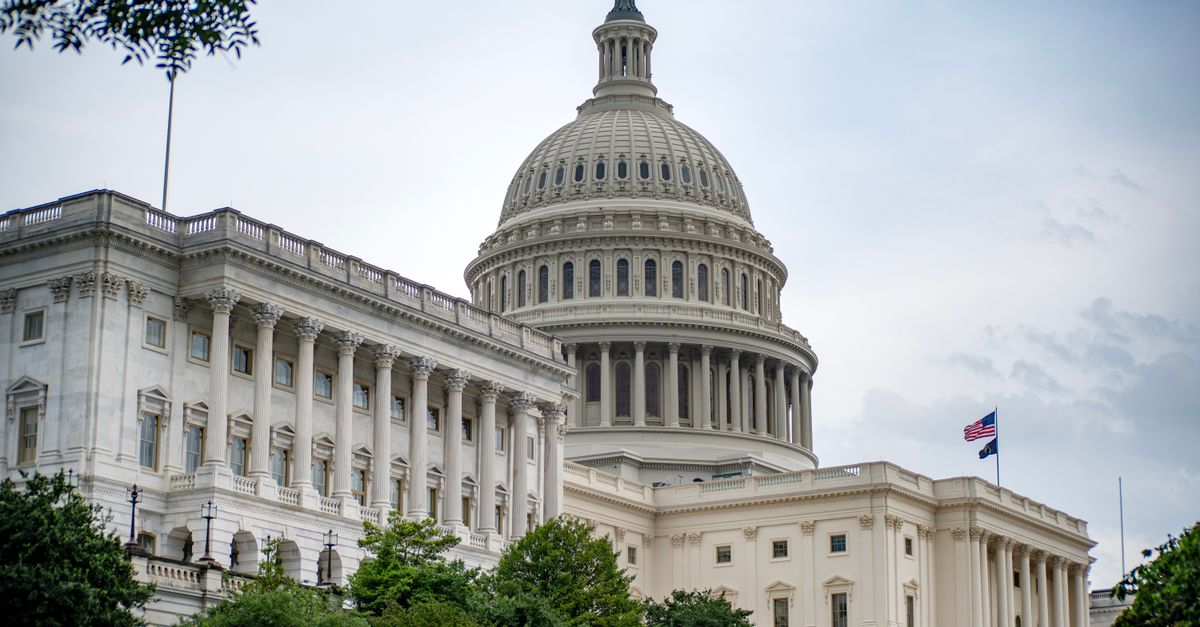
The CLARITY Act, the most ambitious attempt yet to write federal rules for digital asset markets, failed to clear a critical Senate procedural hurdle this week — but it did not die. Sen. Thom Tillis switched his vote to “no” on the cloture motion purely on procedural grounds, a tactical move that preserves his right to file a motion to reconsider and keeps the bill technically alive even as Democrats demand further changes.
The vote failed 49-50, ten short of the 60 votes required to end debate and move the bill forward. Not a single Democratic senator voted yes. Yet seven Democratic senators issued a joint statement afterward saying they remain committed to eventually passing market structure legislation, signaling that the door to a deal is not closed, only stuck.
Why the Same Bill Keeps Coming Back to the Floor
CLARITY is the Senate’s counterpart to a bill the House passed in July 2025 with support from Rep. Shri Thanedar, among others. Since then, the text has gone through 126 substantive revisions aimed at addressing Democratic objections, ranging from stablecoin yield caps and illicit-finance enforcement language to protections for self-custody and software developers. Sen. Angela Alsobrooks backed advancing the bill out of the Senate Banking Committee in May, only to vote against cloture this time — evidence that the negotiations over specific provisions, not opposition to the concept of market structure rules, are what’s holding up passage.
The single biggest sticking point cited by Democrats involves ethics provisions tied to President Donald Trump’s crypto holdings. Trump reported at least $1.4 billion in crypto-related earnings in his 2025 annual financial disclosure, a figure that has made lawmakers wary of writing rules for an industry the sitting president is personally profiting from. Any final bill will likely need language addressing that conflict directly if it is to attract the Democratic votes required to reach 60.
Supporters of the bill, including the Crypto Council for Innovation’s Ryan Eagan, have pointed to the GENIUS Act as a template for how this plays out. That stablecoin bill also failed its first cloture vote, 48-49, in May 2025. Eleven days later, a second cloture vote passed 66-32, and the bill cleared the full Senate the following month. The parallel is not lost on anyone in Washington: a bill can fail once and still become law within weeks if the underlying disagreements are narrow enough to bridge quickly.
What a Stalled Bill Means for the Industry
For crypto firms operating in the United States, the practical effect of CLARITY’s stall is that regulatory clarity continues to come piecemeal from agencies rather than from Congress. The SEC and CFTC are each pursuing their own rulemaking and guidance efforts independent of where CLARITY stands, and the Treasury Department continues implementing the already-passed GENIUS Act on stablecoins. That agency-by-agency approach was underscored just this week when the SEC moved to open the $77 trillion stock market to tokenization even as the legislative deadlock persisted — a reminder that regulators are not waiting on Congress to keep making policy.
Markets reacted to the initial failed vote with a visible dip in crypto-linked equities, a move already documented when the Senate first failed to advance the bill. The industry’s lobbying arm has not taken the setback quietly either; the Crypto Council for Innovation and allied groups have warned of a midterm reckoning for lawmakers who blocked the bill, framing the vote as a preview of campaign-season pressure on both parties.
Separately, a related House effort — a bill to establish a federal Bitcoin reserve — advanced through committee this week, though in a weakened form. That measure, stripped of much of its original enforcement teeth, illustrates a broader pattern this session: crypto legislation is moving, but rarely in the shape its original sponsors intended.
What to Watch Next
The immediate question is timing. The Senate is scheduled to begin recess on October 2 and will not return until after the midterm elections, meaning any second cloture attempt — if one follows the GENIUS Act’s eleven-day pattern — would need to happen within roughly two weeks of the first failed vote, or else wait months.
- Whether Tillis or another sponsor files the motion to reconsider before the October 2 recess deadline.
- Whether negotiators produce language on presidential ethics provisions specific enough to bring Democratic votes across.
- Whether the seven Democratic senators who issued the supportive statement convert that stance into yes votes on a revised text.
- Continued parallel regulatory activity from the SEC, CFTC and Treasury that may reduce the urgency — or the leverage — behind passing CLARITY at all.
Industry investment in compliance infrastructure continues regardless of the bill’s fate, as seen this week in S&P Global’s acquisition of stablecoin code auditor OpenZeppelin, a sign that firms are building for a regulated future whether or not Congress delivers the statute first.
Source: Cointelegraph
This content is for informational purposes only and does not constitute financial or investment advice.


Create a free account to comment and earn rewards.
Create account Log in