
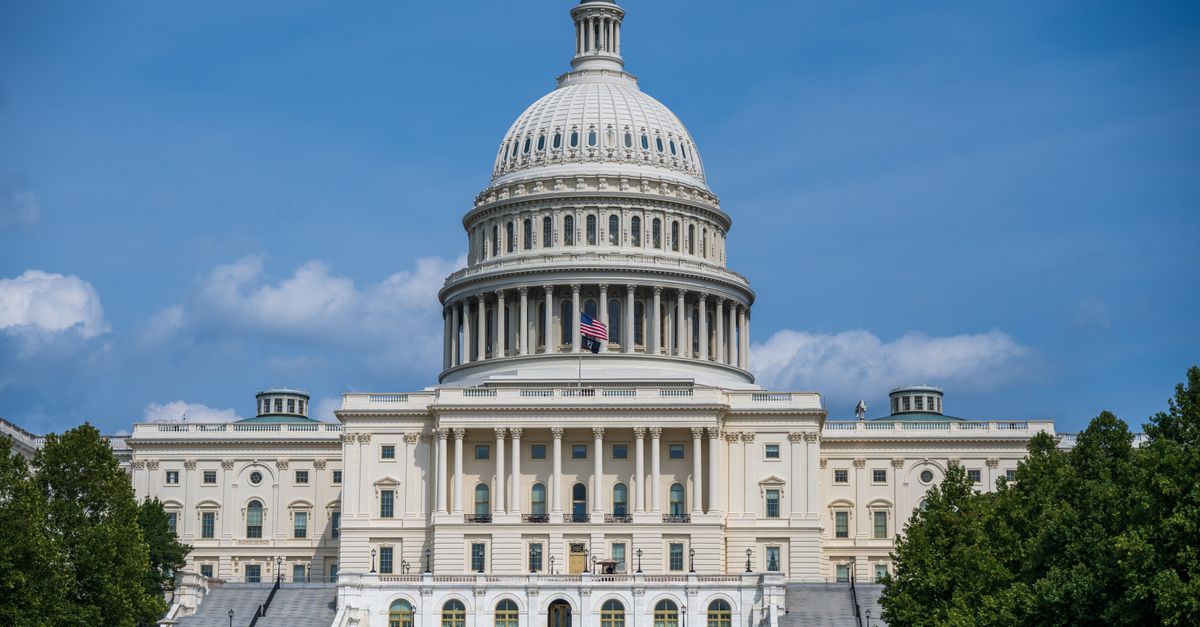
The House Financial Services Committee voted 28-21 along party lines on Wednesday to advance H.R. 8957, the American Reserve Modernization Act, a bill that would write President Trump’s Strategic Bitcoin Reserve into federal law. The vote marks the first time a congressional committee has moved legislation to formally codify a US government Bitcoin stockpile — but the version that passed is considerably weaker than the bill first introduced, stripped of its funding mechanisms and much of its transparency architecture.
Every Republican on the committee backed the measure; every Democrat present opposed it, including Rep. Maxine Waters, whose amendment to the bill failed by the same 21-28 margin. Reps. French Hill, Bryan Steil and Nick Begich were the Republicans most closely associated with shepherding the legislation through committee.
From Executive Order to Statute
Trump created the Strategic Bitcoin Reserve by executive order in March 2025, a move that let the administration begin treating seized or forfeited Bitcoin as a standing federal asset without needing Congress to sign off. H.R. 8957 would convert that order into a permanent law, a distinction that matters because executive orders can be reversed by a future president with the stroke of a pen, while statutes generally cannot.
Begich introduced the original bill in May with a far more ambitious design. That version proposed funding future Bitcoin acquisitions through Federal Reserve surplus remittances, revaluation of the Treasury’s gold certificates, and tariff revenue — three politically and legally significant funding streams that would have given the reserve room to grow. It also required proof-of-reserve reports every quarter, a cadence meant to give lawmakers and the public frequent visibility into what the government actually holds.
A substitute version authored by Steil and adopted by voice vote before Wednesday’s roll call removed all three funding routes and slowed reporting to once a year. The forked and airdropped asset holding period was also cut from five years to one, a technical change that affects how the Treasury handles Bitcoin-derived assets that spin off from network events.
What the Bill Actually Does
Stripped down or not, the bill still sets concrete deadlines and rules. Treasury would have 180 days to formally establish the Strategic Bitcoin Reserve alongside a separate Digital Asset Stockpile for other tokens. Federal agencies would need to report their crypto holdings within 60 days of enactment, giving Congress a baseline inventory that does not currently exist in public form.
Any Bitcoin deposited into the reserve would be locked for 20 years, with no sale, swap, auction or use as collateral permitted during that window — a provision designed to prevent the reserve from being tapped for near-term budget needs or market interventions. Treasury and the Commerce Department would also get 180 days to study whether future government purchases of Bitcoin are even feasible.
That last point underscores what the bill is not. It authorizes no new purchases of Bitcoin. It only requires a study of whether purchases should happen later, and Treasury Secretary Scott Bessent has already said publicly that he does not support agencies buying crypto with public funds. In other words, the reserve this bill would enshrine is built entirely from Bitcoin the government already holds through seizures and forfeitures, not from fresh acquisitions funded by taxpayers.
What It Means, and What Comes Next
For an industry that has spent years asking Washington for durable rules rather than shifting executive whims, committee passage is a milestone, even a scaled-back one. It shows Republicans have the votes to move Bitcoin-specific legislation through at least one chamber’s committee process. But the removal of Federal Reserve and gold-certificate funding, plus the retreat from quarterly to annual reporting, signals lawmakers are prioritizing political feasibility over ambition — trading a bigger, better-funded reserve for one more likely to survive floor votes and legal scrutiny.
The bill’s path is far from finished. It must still pass a full House vote, and no Senate companion exists yet, meaning any momentum here could stall the way other crypto measures have this year — the CLARITY Act’s collapse in the Senate amid an ethics dispute over Trump’s crypto holdings being one recent example. Committee-level progress on crypto legislation has picked up elsewhere too, including a separate federal crypto tax framework that cleared committee by a wider bipartisan margin just a day earlier, suggesting tax questions may move faster than reserve questions.
Readers should watch three things: whether a full House floor vote gets scheduled, whether any senator introduces a companion bill, and whether the 180-day feasibility study on future purchases produces recommendations that reopen the funding debate Steil’s substitute just closed down.
Source: Decrypt
This content is for informational purposes only and does not constitute financial or investment advice.


Create a free account to comment and earn rewards.
Create account Log in