
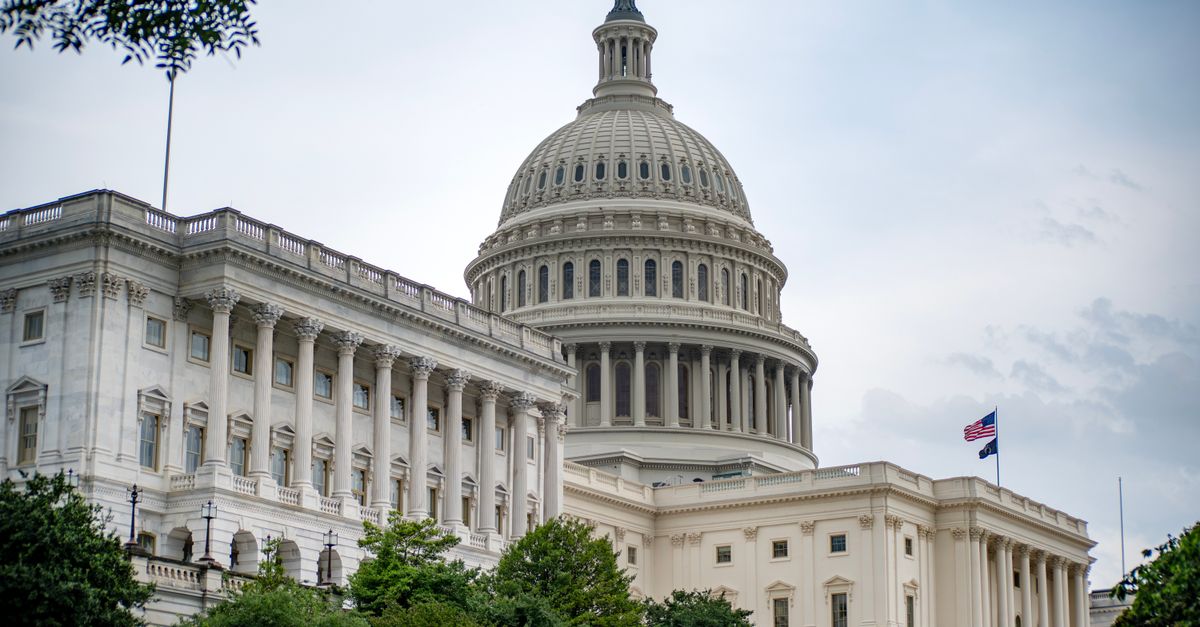
The US Senate on Monday failed to advance the CLARITY Act, the most closely watched piece of crypto market-structure legislation now before Congress, after last-minute talks over ethics restrictions on officials’ digital-asset holdings collapsed. The cloture vote needed 60 votes to move forward and did not get them, leaving a bill years in the making stalled indefinitely.
The breakdown was not over the technical architecture of how digital assets should be regulated — an area where negotiators had reportedly found common ground — but over a much more politically charged question: whether the bill does enough to prevent public officials, including President Donald Trump, from personally profiting off the very market the legislation would regulate.
What the bill was supposed to do
H.R. 3633, known as the CLARITY Act, aimed to give the United States a long-missing rulebook for digital asset markets, clarifying which federal agencies oversee which tokens and how exchanges, issuers and other intermediaries should be treated under securities and commodities law. The version that reached the floor ran 635 pages and reportedly incorporated 126 substantive changes meant to address concerns raised by Democrats during negotiations, according to details in the bill’s drafting history.
Republican Senate Banking Committee Chairman Tim Scott led the push to bring the bill to a vote, and staff for his committee convened a last effort in Sen. Thom Tillis’s office to close out remaining disagreements before Monday’s roll call. Those talks, as reported, ended without an agreement. That meeting followed days of visible strain: earlier reporting had already flagged a revolt brewing hours before the cloture vote and a scramble in which Senate Republicans rewrote the bill in hopes of salvaging enough Democratic support.
Why the ethics question sank the deal
Several Democratic senators who had helped shape earlier drafts of the bill — including Kirsten Gillibrand, Mark Warner, Cory Booker, Raphael Warnock, Ruben Gallego, Angela Alsobrooks and Catherine Cortez Masto — ultimately voted against advancing it. Their central objection was that the bill’s provisions restricting crypto holdings by public officials were too weak, particularly given the president’s own financial exposure to the industry.
Sen. Elissa Slotkin was among the most pointed critics, arguing the ethics language did not go far enough and separately raising concerns about gaps in money-laundering oversight and the enforcement capacity of agencies such as the Commodity Futures Trading Commission, which would take on a larger regulatory role under the bill. Sen. Bernie Sanders framed the fight in explicitly political terms, citing figures showing crypto-industry donors have spent nearly $300 million on midterm election efforts and that Trump and his family have collected more than $1.4 billion from crypto ventures. Those numbers, whatever one makes of them, underscore why a technical market-structure bill became entangled in a fight over personal financial conflicts at the highest levels of government.
The dispute had been building for days. State attorneys general had already urged the Senate to reject the bill before the vote, and by the time senators gathered on the floor, odds of passage had sunk as Democrats rejected what Republicans had billed as a final offer.
What it means and what to watch
For an industry that has spent years lobbying for a clear federal rulebook, the failed vote is a setback but not necessarily a final one. Cloture votes can be revisited, and nothing in Monday’s outcome forecloses another attempt at negotiation. But the episode makes clear that market-structure reform is now inseparable from the broader political debate over Trump’s personal financial ties to crypto — a debate that shows no sign of resolving quickly.
Several concrete things are worth tracking in the weeks ahead. First, whether Scott and Tillis’s offices reopen talks on tighter ethics language, and whether any revised text addresses Slotkin’s specific complaints about anti-money-laundering enforcement and CFTC resourcing. Second, whether the coalition of Democrats who broke away holds together or fractures as election-year pressures mount. Third, whether separate crypto-adjacent measures moving through Congress — such as the committee vote on codifying a federal Bitcoin reserve into law — advance independently of the stalled market-structure fight, since they raise different political questions.
Until a new version of the CLARITY Act, or a substitute bill, secures 60 votes, US digital asset markets will continue to operate under the existing patchwork of agency guidance and enforcement actions rather than a unified statute. That leaves exchanges, issuers and investors without the regulatory certainty the bill was designed to provide, and it leaves the ethics question — how to wall off elected officials’ personal crypto interests from the rules they help write — as the central obstacle to getting there.
Source: CryptoSlate
This content is for informational purposes only and does not constitute financial or investment advice.


Create a free account to comment and earn rewards.
Create account Log in