
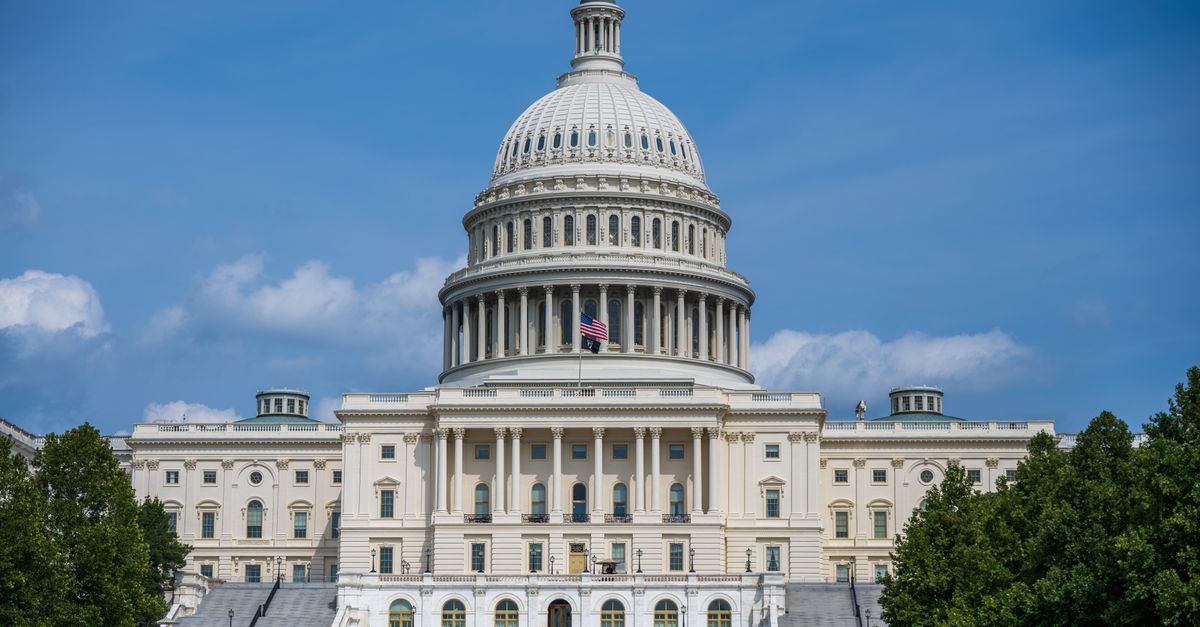
The U.S. Senate’s attempt to write comprehensive rules for crypto trading has failed, at least for now. The Digital Asset Market Clarity Act fell short in a key procedural vote earlier this month, undone by a bipartisan revolt over ethics concerns tied to President Donald Trump’s personal crypto business ties and a separate, unresolved dispute over stablecoin yield rules. For an industry that has spent more than a year treating this legislation as its top Washington priority, the defeat leaves the core question of who regulates spot crypto markets — the SEC or the CFTC — unanswered.
The bill needed 60 votes to clear the Senate’s filibuster threshold and did not get them. That threshold matters because it forces any market structure law to attract support well beyond a simple partisan majority, and in this case that bipartisan coalition never solidified.
How the bill got here
The House passed its own version of the Clarity Act in July 2025 by a vote of 294-134, with 78 Democrats joining Republicans in favor — a rare show of cross-party agreement on crypto policy. Rather than taking up that House-passed text, the Senate chose to draft its own version, a decision that effectively restarted the clock. The Senate Banking Committee advanced its draft in May 2026, but the process had already been complicated months earlier: in January 2026, Coinbase chief executive Brian Armstrong withdrew his support for the committee’s approach over how the bill treated stablecoin yield, triggering an extended round of negotiations between the crypto industry and banking interests that dragged into the fall.
Layered on top of that technical fight was a political one. Senate Republicans released an ethics proposal in early September 2026 meant to address concerns about Trump’s crypto holdings, but it did not satisfy Democratic critics. Sens. Ruben Gallego, Angela Alsobrooks and Kirsten Gillibrand were among those who opposed the bill, citing the president’s ties to World Liberty Financial, the $TRUMP memecoin and the American Bitcoin mining venture. Those objections echo a pattern from the GENIUS Act debate in May 2025, when nine Senate Democrats initially opposed that stablecoin law over similar conflict-of-interest concerns before ultimately voting yes. This time, the concerns proved harder to resolve. Trump’s financial disclosures gave the objections concrete numbers to point to: a June 2026 filing showed $1.4 billion in crypto-related earnings in his first year back in office, part of $2.2 billion in such earnings across all of 2025.
What the failure actually means
The immediate consequence is regulatory limbo. The crypto sector, valued at roughly $3 trillion, continues to operate without a clear statutory line between SEC and CFTC jurisdiction over spot digital asset markets. The GENIUS Act, passed last year, settled stablecoin issuance rules, but it never touched the broader market structure question that the Clarity Act was designed to answer. Exchanges, token issuers and trading platforms are left to navigate enforcement actions and existing case law rather than a purpose-built statute — a gap our earlier coverage of the Senate deadlock pushing crypto rules into regulators’ hands examined in detail.
That vacuum has real consequences beyond Washington. Enforcement agencies are already filling some of the space legislation left open — the CFTC’s suit against Cash FX Group over an alleged $950 million crypto forex scheme and the Justice Department’s forfeiture complaint scrutinizing Tether and Bitfinex’s banking ties are both examples of regulators acting through existing tools rather than a new statutory framework. Industry voices including Ripple’s Stu Alderoty, the Digital Chamber’s Cody Carbone, Wintermute’s Ron Hammond and Ava Labs’ Charley Cooper had all pushed for the bill precisely to reduce reliance on this kind of case-by-case enforcement.
What comes next
The vote landed roughly six weeks before the November midterm election, a timing that all but guarantees the issue will not return to the floor before voters go to the polls. Several things are worth watching in the meantime:
- Whether Senate leadership attempts a revised version that separates the ethics provision from the underlying market structure text, or whether the bill is shelved until a new Congress.
- Whether the stablecoin yield dispute that split Coinbase from the Senate Banking Committee’s draft gets resolved independently, given related regulatory action such as the Federal Reserve’s 392-page stablecoin rule setting a 48-hour countdown for reserve gaps.
- How Rep. Ritchie Torres and other House members respond, given that chamber already passed its own bipartisan version and may face pressure to negotiate a new compromise text.
- Whether the SEC and CFTC move to clarify jurisdictional boundaries through guidance or rulemaking in the absence of statutory direction, and how that affects markets beyond U.S. borders, including dollar-pegged stablecoin flows into remittance corridors like the one detailed in our report on Mexico’s stalled stablecoin rules.
For now, the Clarity Act’s collapse underscores how thoroughly crypto policy has become entangled with questions about the president’s own financial interests — a dynamic that shows no sign of resolving before Congress returns to the issue, if it does at all this term.
Source: CoinDesk
This content is for informational purposes only and does not constitute financial or investment advice.



Create a free account to comment and earn rewards.
Create account Log in