
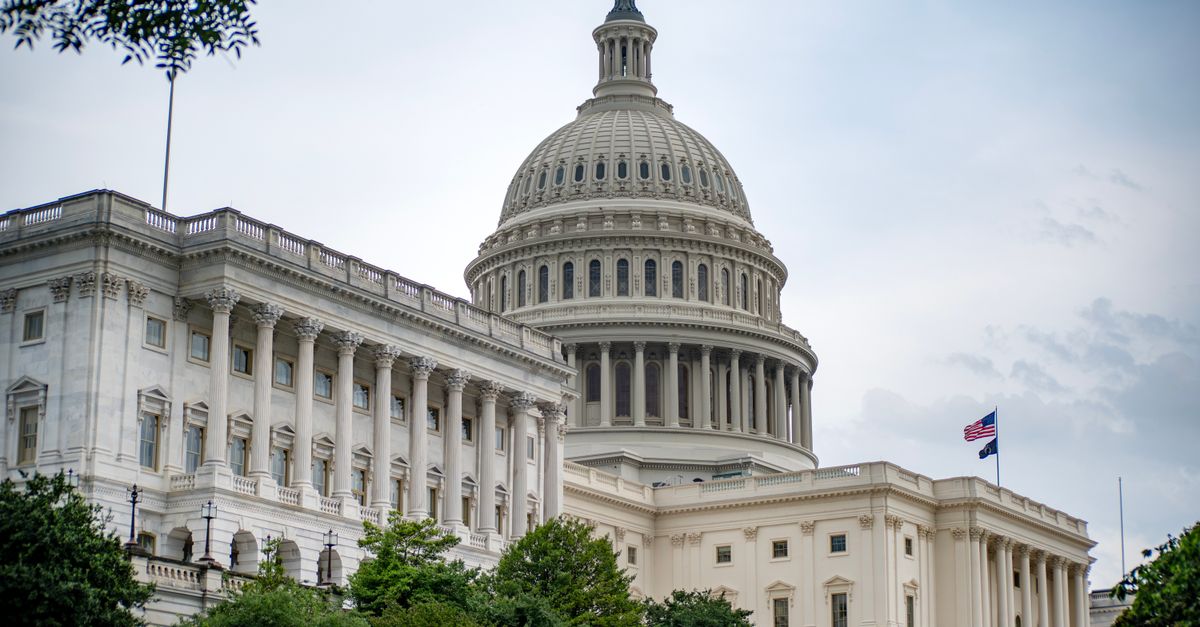
The U.S. Senate on Monday rejected a procedural vote to advance the Clarity Act, the most ambitious attempt yet to write a comprehensive federal rulebook for digital assets, falling one vote shy of the 60 needed with a 49-50 tally against advancement. Senator Thom Tillis has already filed a motion to reconsider, meaning the bill is not dead but stalled at the worst possible moment, just weeks before a legislative calendar that gets tighter as November elections approach.
For an industry that has spent years asking Washington for basic definitions — what counts as a security, what counts as a commodity, who regulates a stablecoin issuer versus a decentralized exchange — the vote is a reminder that political consensus remains harder to build than technical consensus. The Clarity Act was meant to answer those questions in one sweeping statute, splitting oversight between the Securities and Exchange Commission and the Commodity Futures Trading Commission and giving companies a rulebook they could build against instead of guessing at through enforcement actions.
A Year of Negotiations Unravels at the Finish Line
The bill did not fail for lack of effort. Sponsors including Senator Cynthia Lummis and Senator Tillis spent roughly a year negotiating language covering stablecoin reward structures, how software developers who never custody user funds should be treated, and law enforcement provisions meant to address illicit finance concerns. As Senate Republicans rewrote the bill before the cloture vote, they were trying to thread a needle that had already frayed. A version of that rewrite still triggered pushback from within the industry’s own ranks in the hours before the vote, as detailed in coverage of the revolt against the rewritten text.
What ultimately sank the vote, according to the senators who opposed it, was not the technical architecture of the bill but a set of unresolved political questions. Democratic senators Angela Alsobrooks, Catherine Cortez Masto, Ruben Gallego and Kirsten Gillibrand cited ethics concerns tied to President Trump’s own crypto holdings — including his family’s involvement with World Liberty Financial, the venture run by his sons, and his personal memecoin — as well as open questions about prediction market rules and law enforcement authority. Those concerns had been building for days; a Sunday preview of the fight already flagged that the bill’s votes were still short heading into Tuesday’s test, and the ethics dispute in particular proved impossible to paper over.
What the Failure Actually Means
The immediate practical consequence is narrow but real: nothing changes in how digital assets are regulated in the United States today. The SEC and CFTC continue operating under existing statutes and case-by-case enforcement, the same patchwork that has frustrated exchanges, custodians and token issuers for years. No new statutory definitions, no new safe harbors, no new division of labor between regulators takes effect.
The procedural mechanics matter here too. Tillis’s motion to reconsider keeps the door open for another cloture vote within two days, so this is not necessarily the bill’s final chapter. There is precedent for that kind of second act: a similar failed procedural vote on stablecoin legislation last year eventually became law after further negotiation. Whether the Clarity Act follows that path or simply stalls out depends on whether the ethics language and law enforcement provisions that split Democrats and Republicans can be rewritten in a way both sides accept.
Even a Senate win would not have ended the story. The bill would still need House approval, and that chamber cannot take it up until after the November elections, meaning the earliest realistic path to a signed law was already going to run through a lame-duck or newly seated Congress. The White House’s own crypto advisor, Patrick Witt, had projected confidence heading into the vote, a stance covered ahead of the failed count in reporting on his confidence before the Clarity Act vote. That optimism now looks premature, though not necessarily wrong about the bill’s eventual fate — only about its timing.
What Comes Next
Several concrete markers will show whether the Clarity Act has a real second life or is effectively shelved until after the elections:
- Whether Tillis’s motion to reconsider produces a new cloture vote within the two-day window, and whether sponsors have adjusted the ethics and law enforcement language to win over the four Democratic holdouts.
- Whether the White House and congressional Republicans make any visible concession on the provisions tied to President Trump’s crypto holdings, given that this was the sticking point Democrats named explicitly.
- How Ripple, whose chief executive Brad Garlinghouse has been a vocal advocate for federal clarity, and other industry figures respond publicly in the coming days.
- Whether Stand With Crypto, the advocacy group backed by Coinbase, follows through on tracking how individual senators voted, a signal that the industry intends to make this vote a factor in November’s elections much as it did with its political spending in 2024.
For now, the practical reality for exchanges, issuers and investors is continuity of uncertainty. The regulatory questions the Clarity Act was designed to settle — who oversees what, and under which rules — remain open, and the political fight over how to answer them has simply moved to a new, narrower window before the legislative calendar fills up with election-year business.
Source: The Block
This content is for informational purposes only and does not constitute financial or investment advice.


Create a free account to comment and earn rewards.
Create account Log in