
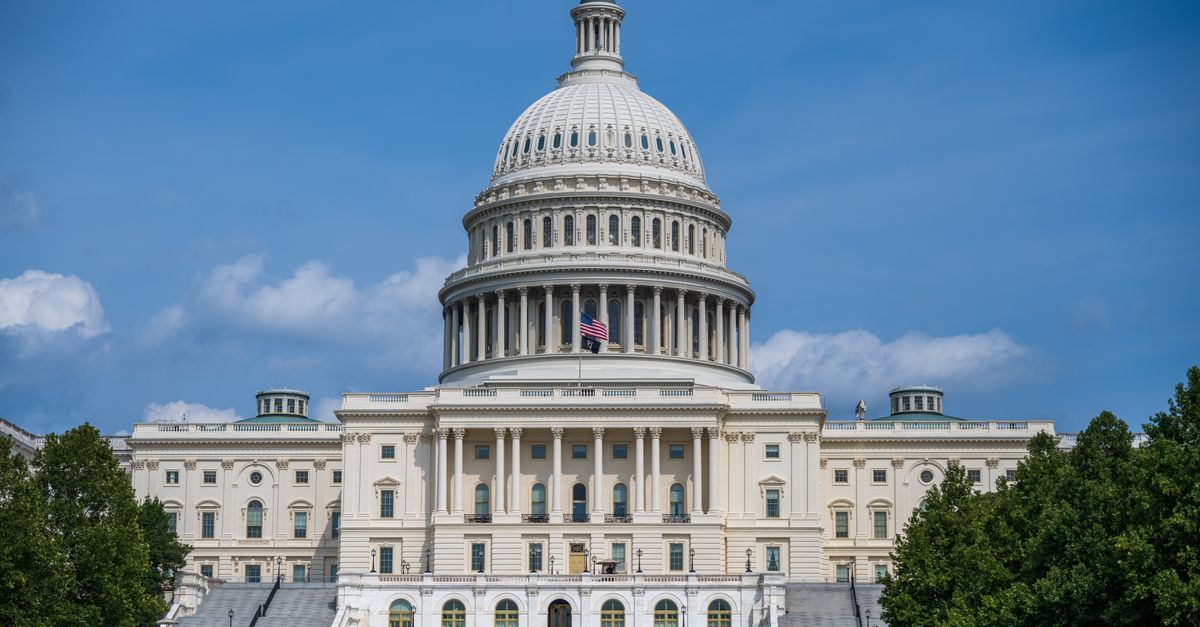
Fairshake, the crypto industry’s best-funded political action committee, intends to spend $30 million opposing Sherrod Brown’s 2026 bid to reclaim his Ohio Senate seat, a spokesperson confirmed. It is a second act: the PAC already poured $41 million into defeating Brown in 2024, when he lost to Republican Bernie Moreno by roughly four percentage points in a race that drew more than $300 million in total outside spending.
The announcement, reported Sept. 21, 2026, signals that the digital-asset industry has no intention of stepping back from electoral politics even after helping reshape one of the most expensive Senate contests in the country’s history. A Fairshake spokesperson said additional spending announcements are expected before Election Day on Nov. 3.
Why Brown, Again
Sherrod Brown is not a random target. As the former chair of the Senate Banking Committee during the last Democratic majority, he was one of Washington’s most prominent skeptics of loosening rules for digital-asset firms, and his committee perch gave him direct influence over legislation and nominations that touched the crypto industry. His defeat in 2024 removed that gatekeeper; his attempt to return in 2026 puts him back in the industry’s crosshairs.
Fairshake is funded overwhelmingly by two of the sector’s largest companies, Coinbase and Ripple Labs, which has made the PAC a proxy for how much the industry is willing to spend to shape the composition of Congress. The group reported a $122 million war chest in August, meaning the $30 million now earmarked for the Ohio race represents a meaningful but not exhausting share of its resources heading into the midterms.
The stakes go beyond one Senate seat. Control of Congress in 2026 will determine who writes the next generation of digital-asset legislation, sets budgets for regulators like the Securities and Exchange Commission and Commodity Futures Trading Commission, and confirms officials who oversee those agencies. That is precisely the terrain where recent legislative setbacks have already reshaped the landscape: the collapse of the Senate’s Clarity Act effectively left crypto rulemaking in the hands of the SEC and CFTC rather than a comprehensive statute, a development critics argue is now pushing crypto activity and rule-setting offshore.
What the Spending Signals
The scale of Fairshake’s commitment says less about Sherrod Brown personally than about how the crypto industry now approaches political risk. Rather than lobbying incumbents after they are seated, the PAC’s strategy has been to intervene directly in campaigns, spending tens of millions of dollars to help elect or defeat specific candidates based on their record toward digital-asset regulation. The 2024 Ohio race, where combined spending topped $300 million, demonstrated that this approach can work at scale even in a single state contest.
That said, the political environment Fairshake is spending into has shifted. Prediction markets such as Kalshi currently favor Democrats retaking majorities in both the House and Senate in 2026, a dynamic that would complicate the industry’s recent legislative wins if Democratic committee chairs less sympathetic to light-touch crypto regulation regain gavels. Kalshi itself has been expanding its footprint in adjacent markets, recently filing for stock perpetual futures products alongside similar moves from Coinbase and Kraken, underscoring how prediction markets and crypto exchanges are increasingly intertwined with the same regulatory and political questions at stake in races like Ohio’s.
For everyday observers, the Brown-Moreno rematch functions as a live case study in how much money the crypto sector believes is justified to protect favorable policy outcomes. Coinbase, in particular, has multiple regulatory threads riding on the composition of the next Congress and its appointees, from the SEC’s tokenized-stock framework — a rule some analysts say already favors incumbents like Coinbase, Robinhood and Circle — to the company’s own pending application for single-stock perpetual futures approval in the U.S.
What Comes Next
Several concrete markers will show whether Fairshake’s bet pays off and what it means for the broader industry:
- Additional spending disclosures from Fairshake before Nov. 3, which the PAC’s spokesperson said are already expected.
- Whether Brown’s campaign and allied Democratic groups can match or offset the $30 million in opposition spending, given the party’s stronger national polling position compared with 2024.
- How other crypto-aligned PACs and donors behave in parallel races, since the 2024 cycle showed Fairshake was not the only outside spender in Ohio.
- Whether a Democratic-controlled Congress, if it materializes, revisits the SEC and CFTC rulemaking authority left unresolved after the Clarity Act’s failure.
None of this guarantees a particular electoral or regulatory outcome. But the reappearance of a nine-figure-adjacent spending commitment against a single Senate candidate makes clear that the crypto industry now treats election spending as a core part of its regulatory strategy, not a one-time reaction to a single lost vote.
Source: Cointelegraph
This content is for informational purposes only and does not constitute financial or investment advice.

Create a free account to comment and earn rewards.
Create account Log in